
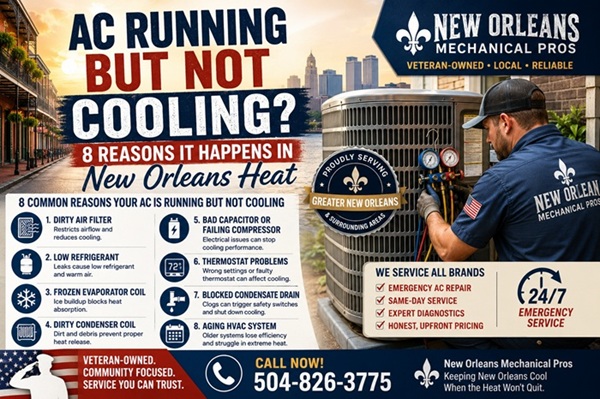
Your AC is humming along, the outdoor unit is spinning, and the thermostat says the system is running – but your house feels like a steam room. If your AC is running but not cooling in New Orleans, you are not alone. The combination of intense heat and relentless humidity pushes air conditioning sys
Your AC is humming along, the outdoor unit is spinning, and the thermostat says the system is running – but your house feels like a steam room. If your AC is running but not cooling in New Orleans, you are not alone. The combination of intense heat and relentless humidity pushes air conditioning systems past their limits every summer, turning minor issues into miserable afternoons. Below, we break down the eight most common causes, what you can safely check yourself, and when it is time to call in the professionals at New Orleans Mechanical Pros.
Key Takeaways
When an AC is running but not cooling in New Orleans, the root cause almost always falls into one of four categories: airflow restriction, refrigerant problems, electrical failures, or age-related decline – all of which are amplified by extreme heat and humidity.
- New Orleans humidity frequently exceeds 80% in July and August, forcing compressors to run longer cooling cycles and making even small AC problems feel like a total system failure.
- The most common culprits are a dirty air filter, low refrigerant from a refrigerant leak, a frozen evaporator coil, a dirty condenser coil, thermostat errors, a blocked condensate drain, failing capacitors or compressors, and an aging hvac system.
- Homeowners can safely check filters, thermostat settings, breakers, and outdoor debris before calling a contractor, but refrigerant handling and electrical testing must be left to a licensed HVAC technician.
- New Orleans residents can contact New Orleans Mechanical Pros for same-day and emergency AC repair across the Greater New Orleans and Westbank areas when their air conditioner is blowing warm air.
Why Your Air Conditioning Can Run But Not Cool in New Orleans
An air conditioner can appear to be working – fans spinning, outdoor unit humming – while completely failing to drop the temperature inside your house. This is especially common when the New Orleans heat index climbs above 100°F and the air conditioning system is struggling to remove both heat and moisture simultaneously.
Louisiana humidity forces AC systems to pull gallons of water out of the air every day on top of lowering the temperature. That dual workload exposes any weakness in airflow, refrigerant charge, or compressor performance. In high heat conditions, air conditioners may struggle to remove heat and moisture at the same time, leaving rooms feeling warm and sticky even with the unit running nonstop.
Homes in neighborhoods like Lakeview, Mid-City, the Garden District, and Metairie often have older ductwork and limited insulation. Leaky or uninsulated ducts allow cooled air to escape before reaching living areas, which can make an otherwise functional system feel completely ineffective.
Here is the basic cooling cycle: the thermostat calls for cooling, the compressor starts, refrigerant circulates between the evaporator coil (inside) and the condenser coil (outside), and cool air is pushed through your duct system. Any disruption – low refrigerant, restricted airflow, or another hvac issue such as a failed capacitor – breaks this cycle and produces the “running but not cooling” symptom.
The rest of this article breaks down the eight most common causes, DIY checks, and when Orleans residents should request service immediately.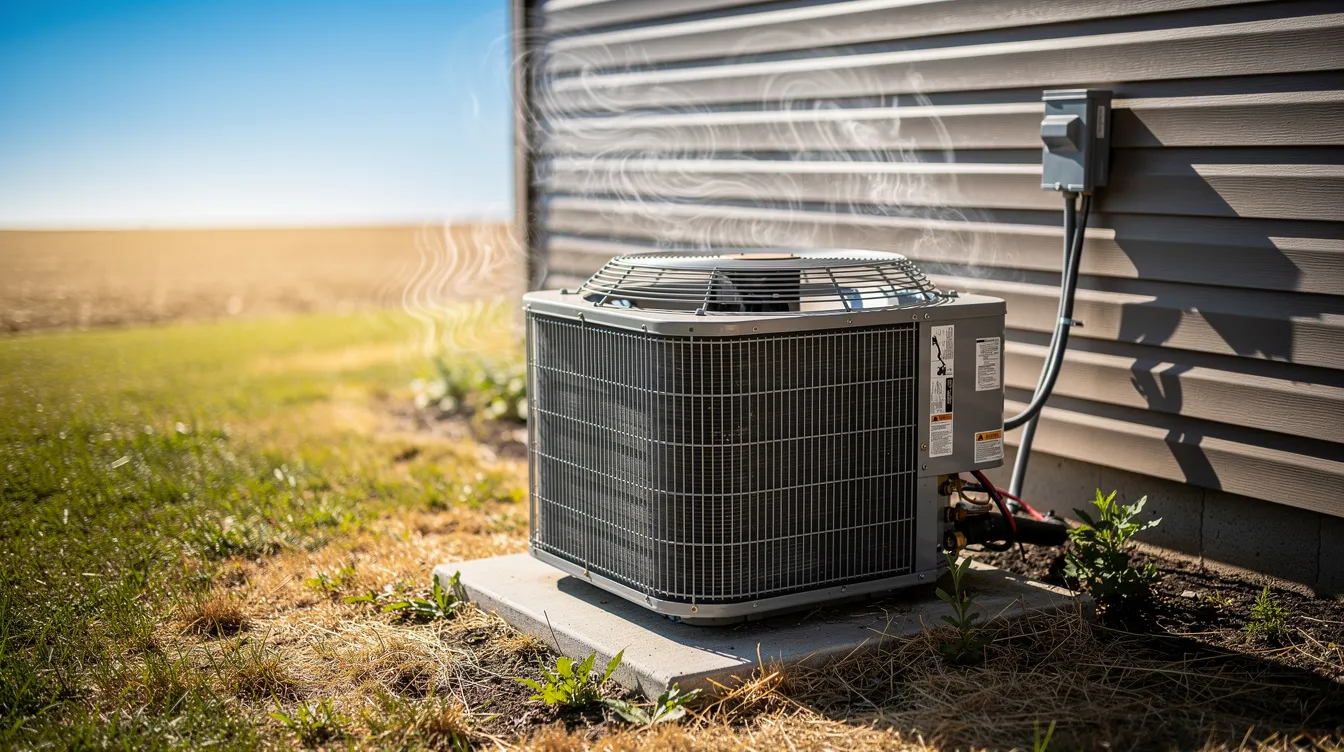
Why This Problem Happens More Often in New Orleans
New Orleans has one of the most demanding climates for air conditioning in the country. The city averages roughly 56 days per year with temperatures at or above 90°F, the cooling season stretches from April through October, and humidity regularly sits between 70% and 90% during peak summer months. That combination creates far more “AC not cooling” service calls than almost any other metro area.
Average summer highs in the low 90s paired with Gulf moisture produce heat index values well over 100°F. Those conditions keep air conditioning systems in the Orleans area running nearly nonstop, accelerating wear on compressors, capacitors, and contactors.
Dense urban neighborhoods like the French Quarter, CBD, and Warehouse District experience additional heat load from concrete, asphalt, and limited tree cover. High humidity levels can make homes feel warmer and force air conditioners to work longer, even when the system is technically operating within its design range.
Louisiana humidity also increases the risk of frozen evaporator coils, mold growth in air handlers, and clogged condensate drains – all of which can cause an AC to blow warm air instead of cold air.
Extreme Heat Puts HVAC Systems Under Constant Stress
New Orleans heat waves, especially in July and August, push AC systems into extended cooling cycles with almost no downtime. In August 2023 alone, the city recorded 15 days with temperatures at or above 100°F, including a record-breaking 105°F on August 27.
- Higher outdoor temperatures make it harder for the condenser coil to reject heat, which increases compressor workload and can lead to overheating or early compressor failure.
- Long runtime means higher electrical demand, which can expose weak capacitors and contactors and trip breakers in older Orleans homes.
- Roofs and attics in neighborhoods like Gentilly and Algiers can reach 130°F or more in poorly insulated structures, raising the indoor heat load dramatically and making a borderline ac unit look like it has completely given up.
Louisiana Humidity Makes Small Problems Much Worse
When relative humidity stays above 70–80%, the evaporator coil has to remove enormous amounts of moisture from the air. Any airflow restriction – a dirty filter, a partially closed vent – can quickly create ice buildup on the coil, choking cooling capacity.
High humidity also reduces heat transfer at both the evaporator and condenser coils. Existing dirt, dust, and biofilm on coil surfaces become even more damaging to efficiency when moisture is constantly present.
Constant moisture around the air handler, condensate pan, and drain line promotes mold and algae growth, increasing the risk of clogged drains that shut down cooling entirely. Homes with poor indoor air quality and limited ventilation are especially prone to musty odors and mold when coils freeze and thaw repeatedly – a cycle that is very common in New Orleans summer weather.
8 Reasons Your AC Is Running But Not Cooling
The eight main causes of an AC running but not cooling are:
- Dirty air filter
- Low refrigerant from a leak
- Frozen evaporator coil
- Dirty outdoor condenser coil
- Bad capacitor or failing compressor
- Thermostat problems
- Blocked condensate drain
- Aging hvac system
Each cause is covered below with specific New Orleans examples, signs to watch for, and guidance on when to call New Orleans Mechanical Pros for AC Repair. Keep in mind that more than one issue can occur at the same time – a dirty filter plus high humidity can easily produce a frozen coil and warm air from every vent.
Homeowners should never attempt refrigerant charging or electrical component testing. These tasks require EPA-certified and licensed HVAC technicians.
1. Dirty Air Filter Restricting Airflow
A clogged air filter is the single most common cause of weak airflow and poor cooling, and it is the easiest to fix. In New Orleans, heavy pollen seasons and high particulate levels can turn a clean filter gray in 30 to 60 days.
A dirty air filter restricts airflow and reduces cooling performance across the entire system. When airflow drops, the evaporator coil surface temperature falls below freezing, moisture in the air turns to ice on the coil, and the system loses its ability to absorb heat. The blower motor and compressor both work harder, driving up your Entergy bill without actually producing cool air. Proper airflow is essential for effective air conditioning and cooling efficiency – without it, the whole cycle breaks down.
Signs for New Orleans homeowners:
- Rooms feel stuffy despite the AC running
- Vents blow weakly compared to normal
- The system runs for longer stretches without reaching setpoint
- The filter is visibly gray or packed with dust
Check and replace standard 1-inch filters every one to two months during summer. If cooling does not improve within one hour of changing the filter, contact New Orleans Mechanical Pros for a deeper inspection.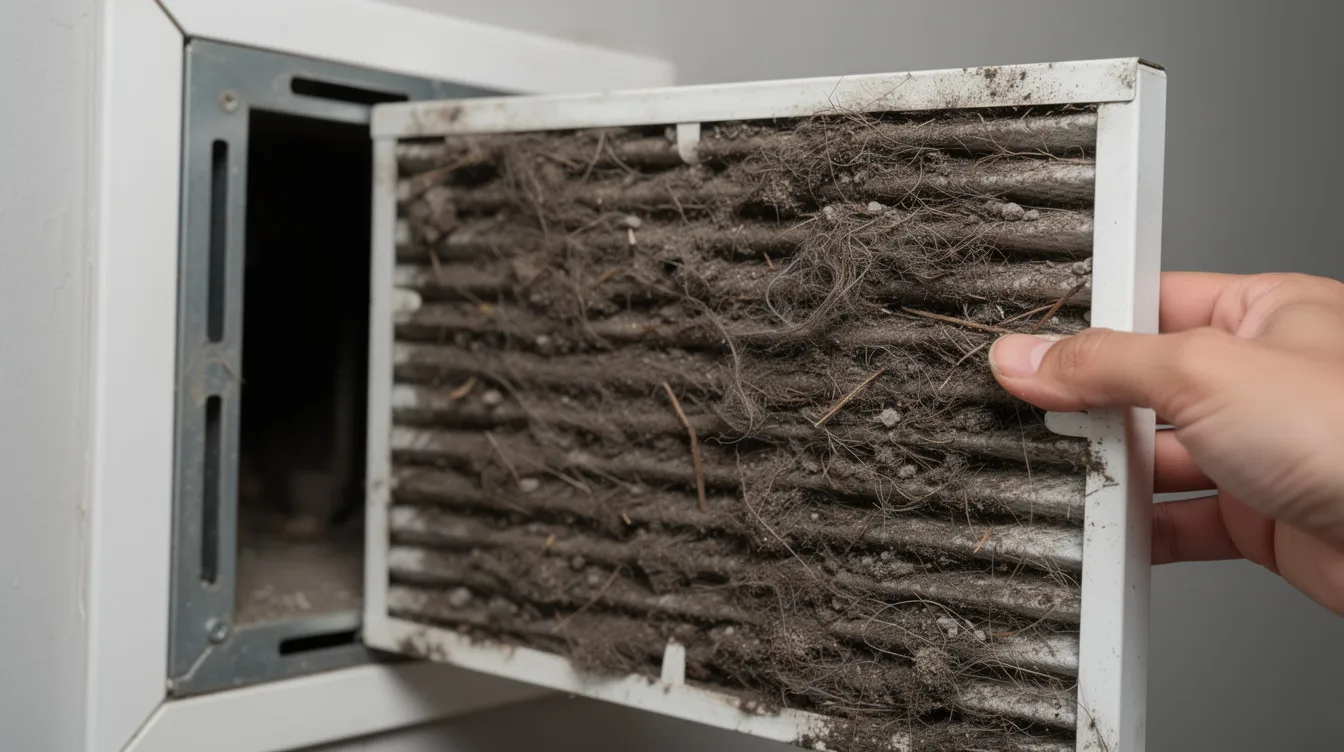
2. Low Refrigerant Due to a Leak
Refrigerant in an air conditioning system is not consumed during normal operation. If levels are low, there is a leak somewhere in the refrigerant circuit – period. Low refrigerant levels reduce the system’s capacity to absorb heat, so the unit may still blow air, but it feels lukewarm or even warm, especially during peak New Orleans afternoons.
Leaky systems can lead to inadequate cooling because the evaporator coil cannot reach the temperatures needed to pull heat from your indoor air. Over time, the compressor is forced to run longer under conditions it was not designed for, increasing the risk of permanent damage.
Common symptoms for local homeowners include:
- Ice forming on the copper refrigerant lines near the outdoor unit
- Hissing or bubbling sounds near the indoor unit or line set
- Noticeably reduced cooling capacity room by room
- Higher-than-expected energy bills
Only EPA-certified HVAC technicians can legally handle refrigerant, perform electronic leak detection, seal the leak, and recharge the system to manufacturer specifications. New Orleans Mechanical Pros is the trusted choice for refrigerant leak detection and repairs across New Orleans, Metairie, Kenner, and Gretna.
3. Frozen Evaporator Coil
The evaporator coil sits inside the air handler or furnace cabinet. It gets cold when refrigerant passes through it, absorbing heat from your indoor air. When everything works correctly, warm air passes over the coil, heat transfers to the refrigerant, and cool air blows into your rooms.
In New Orleans humidity, any combination of low airflow, dirty filters, closed vents, or low refrigerant can cause the coil surface temperature to plunge below freezing. Moisture in the air condenses and freezes on the coil instead of draining away. Frozen evaporator coils can prevent cooling entirely, turning your air conditioner into an expensive fan.
Symptoms to watch for:
- Little or no air coming from supply vents
- Visible ice on refrigerant lines near the indoor unit
- Water puddles under the air handler after the ice thaws
- The AC running constantly but the house not dropping below 78–80°F
If you suspect a frozen coil, turn the AC to “Off” and the fan to “On” at the thermostat to begin thawing. Then call New Orleans Mechanical Pros for professional hvac services to identify and fix the root cause – whether that is a clogged filter, a refrigerant leak, or an airflow problem deeper in the duct system.
4. Dirty Outdoor Condenser Coil
The condenser coil lives inside the outdoor unit. Its job is to release the heat your system removed from indoors into the outside air. When that coil is dirty, the entire cooling cycle suffers.
Blocked outdoor condenser coils prevent effective heat release. In New Orleans, coils collect grass clippings, cottonwood fluff, pollen, and sometimes salt-laden air, especially near the lake. Yards with heavy tree cover and frequent lawn maintenance send debris directly into the condenser fins.
A dirty condenser coil forces higher head pressure inside the refrigerant circuit, which means hotter refrigerant, a compressor that runs longer, and less cooling delivered inside. Over time, the added strain can damage the compressor – one of the most expensive components to replace.
Homeowners can safely rinse the coil with a garden hose (with the power off and the disconnect pulled) to remove surface debris. However, deep cleaning, fin straightening, and chemical treatments should be handled by a professional HVAC technician to avoid bending fins or damaging coil surfaces.
5. Bad Capacitor or Failing Compressor
Start and run capacitors are small electrical components that help the compressor and condenser fan motors start and maintain consistent operation. They are one of the most failure-prone parts in any ac unit, especially in New Orleans heat where constant demand accelerates wear.
When capacitors weaken or fail, the compressor may hum but fail to engage, or short-cycle on and off rapidly. The indoor fan keeps blowing, so the system sounds like it is running – but no actual cooling is happening because the compressor is not compressing refrigerant.
Warning signs include:
- The outdoor unit buzzing or humming without the fan spinning
- Frequent breaker trips when the AC tries to start
- Burning or electrical smells near the outdoor equipment
- Warm air from vents even though the system sounds operational
Long-term neglect, dirty coils, and high ambient temperatures can eventually damage the compressor itself, turning a minor capacitor replacement into a major repair or full system replacement. A malfunctioning thermostat can also mask compressor problems by sending incorrect signals.
These are emergency issues requiring immediate professional attention. New Orleans Mechanical Pros offers same-day and emergency AC repair throughout the Greater New Orleans area, including River Ridge, Kenner, and the Westbank, and is available to restore comfort quickly.
6. Thermostat Problems
Sometimes an AC “running but not cooling” in New Orleans comes down to something as simple as incorrect thermostat settings or dead batteries. Thermostat settings should be verified to ensure the system operates efficiently before assuming a mechanical failure.
Quick checklist:
- Confirm the mode is set to “Cool” (not “Fan Only” or “Heat”)
- Set the fan to “Auto” rather than “On”
- Make sure the setpoint is at least 3–5°F below the current room temperature
- Replace batteries if the display is dim or blank
Calibration issues are common in older New Orleans homes where thermostats sit on sun-drenched exterior walls or near hot kitchens. A thermostat reading 72°F when the room is actually 78°F will not trigger the cooling cycle when you need it. Advanced programmable and Wi-Fi thermostats can also glitch during firmware updates or lose their schedules after power outages – a frequent occurrence during summer storm season.
Upgrading to a modern smart thermostat, installed and configured by New Orleans Mechanical Pros, can improve comfort, energy efficiency, and indoor air quality management throughout your home.
7. Blocked Condensate Drain
In New Orleans humidity, an air conditioner removes gallons of water per day from the indoor air. That water collects in a condensate pan beneath the evaporator coil and flows through a drain line to the exterior or a floor drain. Inspecting the condensate drain is necessary due to high water removal in humid climates like ours.
Clogged condensate lines can lead to cooling issues because algae, mold, and debris build up inside the drain line over time. When the line clogs, many systems have a float safety switch that shuts down the cooling cycle to prevent water damage and help protect your property – even though the indoor fan may continue to blow warm air.
Symptoms of a blocked drain:
- Water pooling around the indoor unit or air handler
- Musty or moldy odors coming from vents
- Intermittent cooling that stops and starts unpredictably
- Gurgling sounds near the air handler
Avoid aggressive DIY drain cleaning with harsh chemicals, which can damage PVC fittings and void warranties. Instead, schedule periodic professional maintenance from New Orleans Mechanical Pros to flush the drain line and treat for algae growth before it becomes a problem.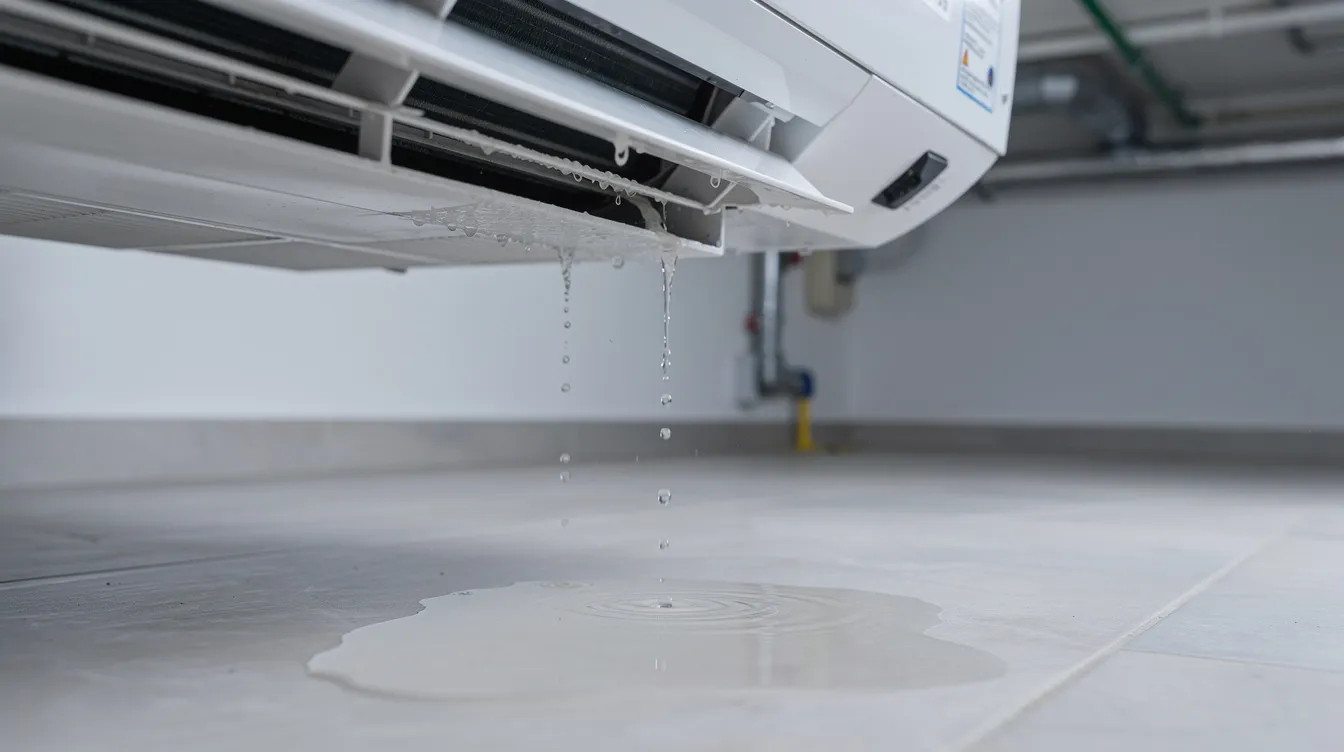
8. Aging HVAC System
Most central air conditioners in the New Orleans area have a typical lifespan of 10 to 15 years, often shortened by salt air, near-continuous summer use, and deferred maintenance. If your system is approaching or past that range, declining performance is not a surprise – it is inevitable.
Aging systems lose capacity as compressors weaken, coils corrode, and electrical components degrade. Many older units still use R-22 refrigerant, which has been phased out and is now extremely expensive to source. Outdated SEER2 efficiency ratings mean higher operating cost for less cooling output, while replacement can save money over time through better efficiency. Uneven air distribution can cause some rooms to be warmer than others, a classic sign that the system can no longer keep up with the load.
Signs it may be time for a new system:
- Repairs becoming more frequent and more expensive
- Energy bills rising year over year with no change in usage
- Hot and cold spots in different rooms
- The system uses R-22 refrigerant
New Orleans Mechanical Pros provides honest guidance on repair versus replacement, including options for high-efficiency ac installation, and the team can install a high-efficiency replacement system when repair no longer makes sense, along with flexible financing and models specifically selected for New Orleans humidity and heat. Sometimes a new ac is the most cost-effective path to dependable comfort.
Warning Signs You Need Emergency AC Repair
In New Orleans summer heat, an AC running but not cooling can quickly become a health and safety concern – especially for children, seniors, and pets in upstairs rooms and older homes. Hot weather makes a malfunctioning AC an emergency in New Orleans, and delays can lead to heat-related illness.
Call for emergency AC repair if you notice any of these red flags:
- The air conditioner is blowing hot air with no improvement
- Indoor temperature climbing above 80°F despite continuous operation
- Burning or electrical smells from the unit or vents
- Loud grinding, screeching, or banging noises
- Frequent breaker trips when the system cycles on
- Visible ice buildup on refrigerant lines or the indoor coil
- Water leaking from the air handler, risking water damage to ceilings or floors
These symptoms can indicate compressor failure, electrical hazards, or refrigerant problems that worsen with every hour of operation. Emergency AC repair services are available 24/7 in New Orleans from several providers, including industry companies like AccuTemp and Calloway HVAC. New Orleans Mechanical Pros also provides 24-hour emergency ac repair and same-day service for homeowners across the Westbank – Harvey, Marrero, Gretna – and throughout Greater New Orleans.
DIY Checks Before Calling an HVAC Technician
Before scheduling a service call, New Orleans homeowners can safely perform a few quick checks that may restore cooling or at least narrow down the problem.
- Verify the thermostat is set to “Cool” mode with the fan on “Auto” and the temperature set at least 3–5°F below the current reading.
- Pull out the return air filter and inspect it. If it looks gray or clogged, replace it with the correct size.
- Walk through every room and confirm that supply and return vents are open, unblocked by furniture or rugs.
- Step outside and inspect the outdoor unit. Remove any leaves, grass clippings, or debris from around the condenser and make sure at least two feet of clearance exists on all sides.
- Check the electrical breaker panel and the outdoor disconnect switch. If a breaker has tripped, reset it once and monitor.
Wait 15 to 30 minutes after any changes to see if temperatures start to drop. If the system stabilizes, great – but keep an eye on it.
A clear safety warning: do not open electrical panels beyond your breaker box, do not attempt to access refrigerant lines, and do not dismantle the air handler. Those tasks belong to licensed HVAC technicians with the right tools and training. If these basic steps do not restore cool air, it is time to request service from New Orleans Mechanical Pros.
How New Orleans Mechanical Pros Diagnoses AC Cooling Problems
New Orleans Mechanical Pros is a local, veteran-owned HVAC company and trusted business in the area, specializing in air conditioning repair throughout the Greater New Orleans area with experience in both cooling and general heating service. Their technicians are trained to diagnose cooling failures quickly so homeowners are not left waiting in the heat.
A typical diagnostic visit starts by confirming symptoms with the homeowner, then moves to a systematic inspection of the thermostat, air handler, and outdoor unit. From there, techs run through a series of targeted tests:
- Refrigerant pressure checks with superheat and subcooling measurements
- Electronic leak detection for suspected refrigerant leaks
- Capacitor testing and contactor inspection
- Compressor amperage draw measurement
- Airflow velocity and static pressure testing across the duct system
- Visual and UV-light coil inspection for dirt, corrosion, or mold
Technicians also look for duct leaks, poor attic insulation, and indoor air quality issues that can make an otherwise functional system feel like a broken air conditioner. Most AC repairs can be completed on the same visit by technicians who carry common parts on their trucks.
New Orleans Mechanical Pros provides clear explanations, upfront pricing before any work begins, and solutions ranging from a simple capacitor swap to a full system replacement. No surprises, no pressure – just reliable comfort restored quickly.
Prevent Future Cooling Problems in New Orleans Climate
Regular HVAC maintenance is the single best defense against AC systems that run but do not cool. In the demanding New Orleans climate, skipping tune-ups is a gamble that rarely pays off.
- Schedule biannual tune-ups – typically spring and fall – where New Orleans Mechanical Pros cleans coils, checks refrigerant charge, tests electrical components, and verifies overall system performance. AC systems should be serviced at least once a year at minimum.
- Replace air filters every one to three months during the cooling season.
- Keep at least two feet of clearance around the outdoor unit year-round.
- Seal duct leaks and improve attic insulation to reduce the cooling load your system has to handle.
- Consider installing a smart thermostat, adding a supplemental dehumidifier, or upgrading to higher-efficiency SEER2 equipment to improve energy efficiency and indoor comfort.
Regular AC maintenance can extend system lifespan by years and help you avoid the cost and stress of emergency breakdowns. Annual maintenance can reduce energy costs by up to 30%, and routine maintenance helps prevent costly emergency repairs. Well-maintained AC units operate at 95% efficiency or higher, which makes a real difference on your monthly Entergy statement.
New Orleans Mechanical Pros offers preventative maintenance plans designed specifically for the local climate, helping customers maintain efficient operation and avoid mid-summer failures.
Areas Served and HVAC Services by New Orleans Mechanical Pros
New Orleans Mechanical Pros provides fast, reliable AC repair for systems that are running but not cooling across the entire Greater New Orleans region.
The team services homes and businesses in New Orleans proper, the French Quarter, Garden District, Mid-City, Lakeview, Algiers, and Westbank communities like Gretna, Harvey, and Marrero. They also serve nearby cities including Metairie, Kenner, River Ridge, Chalmette, Arabi, and Belle Chasse.
Both residential and light commercial air conditioning systems are covered, including central air units, heat pumps, ductless mini splits, and rooftop equipment. Whether you need a quick inspection, a major repair, or a full ac installation, the company has the tools and the local knowledge to get the job done right.
Scheduling is simple – by phone, online form, or same-day appointment. Orleans residents dealing with an AC that is blowing warm air can request service and get a technician dispatched quickly, often within one hour during peak season.
Frequently Asked Questions About AC Running But Not Cooling in New Orleans
Below are answers to the most common follow-up questions New Orleans homeowners ask when their AC is running but not producing cold air. Each answer addresses practical concerns about timelines, cost, safety, and long-term solutions.
How long does it usually take to fix an AC that’s running but not cooling?
Many repairs handled by New Orleans Mechanical Pros – such as capacitor replacements, condensate drain cleanings, or thermostat fixes – are completed in one to three hours on the same visit. Refrigerant leak repairs or compressor replacements may take longer or require a follow-up appointment if parts need to be ordered.
Repair time depends on parts availability, system age, and whether the problem is electrical, mechanical, or refrigerant-related. Same-day service is often available throughout the New Orleans area, so homeowners rarely have to spend a full day without cooling.
Can New Orleans humidity make my AC seem like it isn’t working even if it is?
Yes. Very high humidity can make rooms feel warmer and stickier even when the air conditioner is lowering the temperature correctly. When indoor relative humidity stays above 55–60%, the perceived temperature climbs and comfort drops, regardless of what the thermostat reads.
Every AC has limits on how much moisture it can remove per hour. During extreme New Orleans weather, homeowners may benefit from supplemental dehumidifiers, improved ventilation, or system upgrades designed to handle higher latent loads. New Orleans Mechanical Pros can evaluate whether your current system is sized and configured to manage local humidity effectively.
Is it safe to keep running my AC if it isn’t cooling properly?
Running an AC that is not cooling can be risky in certain situations. If you notice burning smells, loud mechanical noises, or ice buildup, shut the system off immediately to prevent compressor damage, electrical hazards, or water damage from thawing ice.
Short-term operation while troubleshooting basic items like filters and thermostat settings is usually fine. But if cooling does not return after those simple checks, turn the system off and contact New Orleans Mechanical Pros before a small issue becomes a major – and expensive – repair.
How can I tell if I should repair or replace an older AC that runs but doesn’t cool well?
Systems over 10 to 15 years old that need frequent or expensive repairs, use R-22 refrigerant, or carry outdated low-SEER2 ratings are often better candidates for replacement than repeated fixes. A useful rule of thumb: if the repair cost exceeds 50% of a new system’s price, replacement usually makes more financial sense.
Compare your current repair quotes against the cost of a new, high-efficiency system. Factor in rising energy bills, the quality of cooling you are actually getting, and available financing options. New Orleans Mechanical Pros offers free consultations to help homeowners weigh repair versus replacement with clear, honest numbers.
What can I do when installing a new system to avoid future “running but not cooling” problems?
Start with a professional load calculation to ensure the new equipment is correctly sized for your home’s square footage, insulation levels, and duct layout. An oversized system short-cycles and fails to dehumidify; an undersized one runs nonstop and still cannot keep up.
Work with New Orleans Mechanical Pros to choose the right models for New Orleans heat and humidity, plan for strong cooling and heating performance throughout the home, ensure ductwork is sealed and insulated, and set up a maintenance plan from day one to help avoid future heating repair issues after installation. Great service during installation – proper refrigerant charge, verified airflow, calibrated thermostat – pays dividends for years. A well-installed and maintained new system delivers reliable, efficient cooling season after season, giving your community one less thing to worry about in the summer heat.