
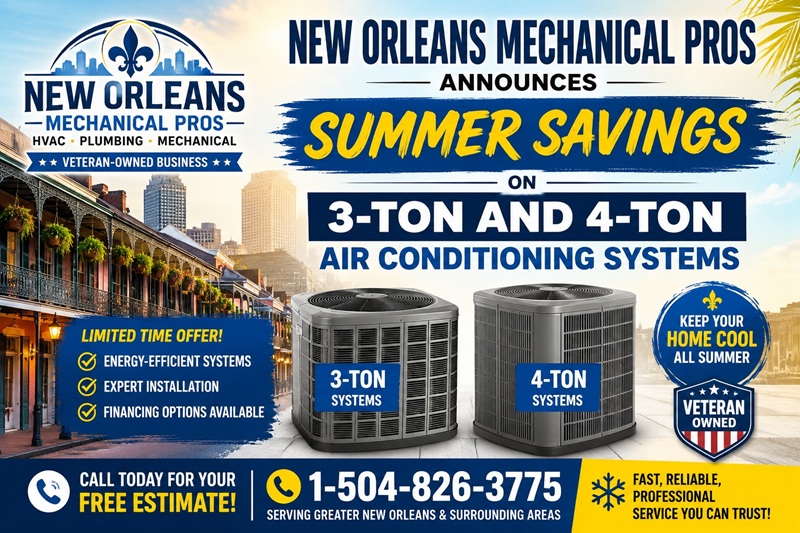
A 4 ton ac system delivers about 48,000 BTU/hr of cooling capacity and is typically right for larger New Orleans homes or homes with high heat gain. Proper sizing requires a Manual J load calculation, not guesswork.
Key Takeaways
- A 4 ton ac system delivers about 48,000 BTU/hr of cooling capacity and is typically right for larger New Orleans homes or homes with high heat gain. Proper sizing requires a Manual J load calculation, not guesswork.
- Summer 2026 promotions across the greater New Orleans area can significantly lower the upfront cost of a 4 ton ac replacement, especially when combined with financing options and utility rebates.
- Professional air conditioning service in New Orleans should include removing the old unit, updating both indoor and outdoor components, charging refrigerant, and testing the full system before handing over the keys.
- New high-efficiency 4 ton ac units can cut cooling bills by up to 20%, improve humidity control, and deliver better comfort through Louisiana’s extreme heat and long cooling season.
- Schedule a free in-home quote for a 4 ton ac system anywhere in the greater New Orleans area to lock in current summer pricing before peak demand hits.
Introduction: 4 Ton AC Systems for Greater New Orleans Homes
In New Orleans, a 4 ton AC system provides about 48,000 BTU per hour of cooling, a common fit for larger homes or houses with high heat gain when the system is properly sized and installed. If you live in a larger home in New Orleans, Metairie, or anywhere across southeast Louisiana, there is a good chance your house runs on a 4 ton central air conditioning system. Two-story layouts, older construction, big windows, and relentless humidity all push cooling loads higher than the national average, making the 4 ton size one of the most commonly installed in the orleans area.
If you are comparing a 4 ton ac unit to other sizes, planning an ac replacement, or upgrading before the worst of summer arrives, this guide focuses on the decisions that matter most for New Orleans area homeowners. Proper sizing and load calculations, local pricing factors, installation steps, energy efficiency standards, ductless mini split alternatives, financing options, signs it is time to replace your current system, and how to choose a qualified hvac contractor in the greater New Orleans area all affect comfort, humidity control, operating costs, and long-term reliability. Replacing AC before summer avoids long waits for service calls and helps you skip the scramble when every hvac company in town is booked solid, while a correctly matched system can reduce inefficient operation, limit avoidable repairs, and keep your home more comfortable through the region’s long cooling season.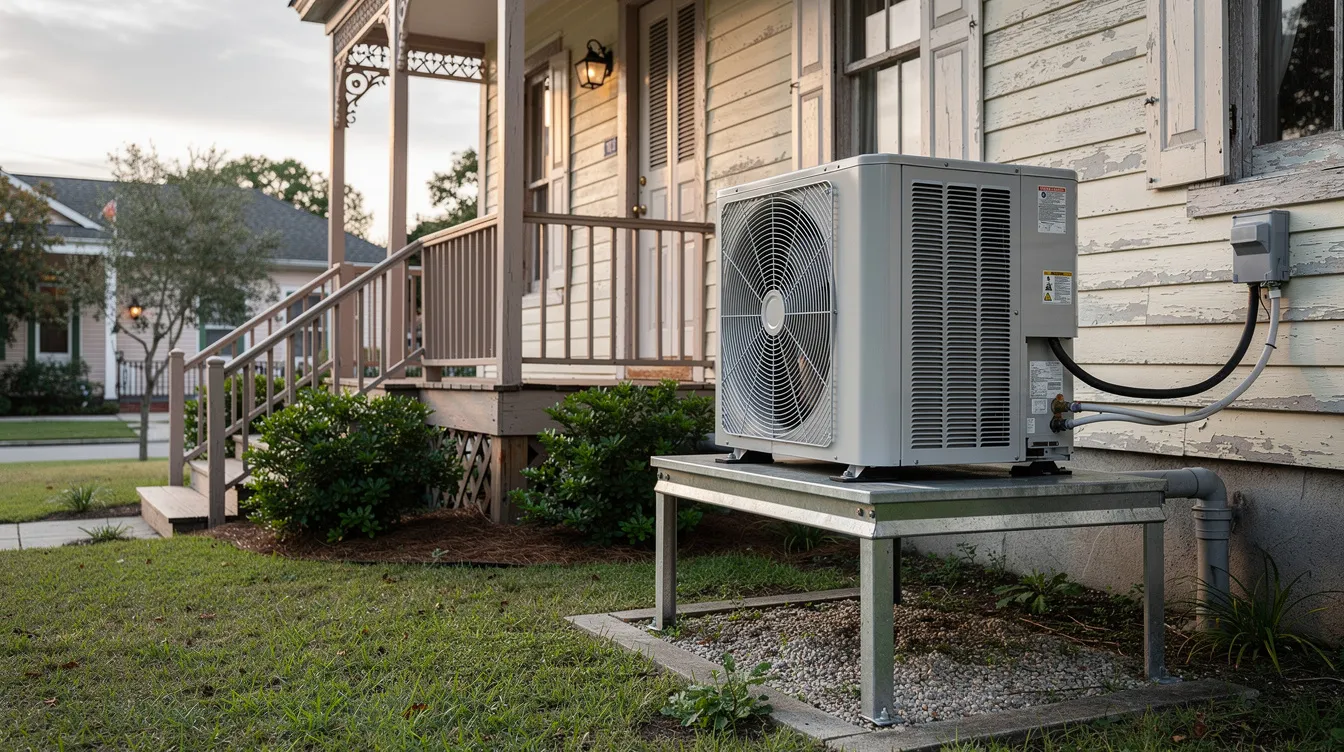
What Is a 4 Ton AC System and Who Is It For?
In HVAC terms, “4 ton” refers to cooling capacity rather than the weight of the ac unit. One ton equals 12,000 BTU per hour, so a 4 ton system delivers approximately 48,000 BTU/hr of cooling power.
A 4-ton AC system typically cools homes around 2,000 to 2,400 square feet, though the actual range can stretch to 2,600 square feet depending on insulation quality, layout, and sun exposure. In New Orleans’ IECC Climate Zone 2A, several factors push cooling loads upward:
- Two-story designs with large roof surface areas
- Single-pane or aging windows with high solar heat gain
- Minimal attic or wall insulation
- West- or east-facing elevations that absorb afternoon sun
Some older homes in new orleans neighborhoods like Lakeview, Metairie, or Marrero may require a 4 ton system even at smaller square footage due to poor insulation and large glass areas. A modern, well-insulated single-story home of similar size might only need 3 or 3.5 tons. The difference comes down to a professional load calculation, which is the only reliable way to determine the right system size for your specific needs.
Why Proper AC Sizing in New Orleans Matters More Than Just “Bigger Is Better”
Oversizing and undersizing both create problems, and in a humid Gulf South climate, the stakes are higher than in drier regions. Humidity control is crucial for comfort in New Orleans due to its climate, and the wrong tonnage makes that control nearly impossible.
A Manual J load calculation is essential for proper HVAC system sizing. It accounts for:
- Square footage and ceiling height
- Number of occupants and internal heat sources
- Wall and attic insulation R-values
- Window area, type, and orientation
- Local climate data (New Orleans design cooling dry-bulb is approximately 93–95°F with a wet bulb around 80°F)
What happens when sizing is wrong:
- An undersized unit runs constantly, can’t keep up on 95°F August afternoons, and drives up energy bills while generating more ac repair calls from accelerated wear.
- An oversized 4 ton system short-cycles, creating uneven temperatures and leaving the air clammy because it doesn’t run long enough to strip moisture from the indoor air. The result is a home that feels cool but uncomfortable, with elevated mold risk.
A reputable air conditioning service will always perform proper sizing before recommending a 3 ton vs. 4 ton ac system in New Orleans. If a contractor quotes you a tonnage without measuring your home, that is a red flag.
4 Ton AC System vs. 3 Ton: How to Decide in the Greater New Orleans Area
Both 3 ton and 4 ton cooling systems are common in local homes, and the right size depends on load rather than guesswork. Here is a quick comparison:
| Factor | 3 Ton System | 4 Ton System |
|---|---|---|
| Typical home size | 1,400–2,000 sq ft | 2,000–2,600 sq ft |
| Best for | Smaller single-story, good insulation | Larger two-story, additions, poor insulation |
| Cooling capacity | 36,000 BTU/hr | 48,000 BTU/hr |
| Humidity removal | Adequate for smaller volumes | Better for high-volume spaces |
Upgrades like double-pane windows, blown-in attic insulation, and duct sealing can shift the recommendation. A house that currently needs 4 tons might only need 3.5 tons after envelope improvements, saving money on equipment and monthly electric bills.
Homeowners should schedule a free on-site assessment to compare both options, estimated ac replacement costs, and long-term energy use for each tonnage before committing.
Average 4 Ton AC Replacement Cost in New Orleans
For 2026, a complete 4 ton central air conditioning replacement in the greater New Orleans area, including equipment and labor, typically falls in the range of $9,000 to $13,000. Recent homeowner reports from Metairie and New Orleans show full replacements landing between $9,800 and $12,800 depending on features and scope.
Major cost drivers include:
- SEER2 efficiency level of the new unit (higher ratings cost more upfront)
- Single-stage vs. two-stage vs. variable-speed compressor technology
- Brand selection and whether both the indoor air handler and outdoor condenser are replaced together
- Existing ductwork condition, electrical panel upgrades, and condensate drain work
Lower-end jobs with straightforward access and minimal duct work may come in closer to $7,000–$9,000. High-end variable-speed installations with premium brands can push above $13,000–$15,000.
A free estimate should provide line-item pricing for the ac unit, labor, permits, and optional add-ons like smart thermostats or indoor air quality services upgrades. Energy-efficient AC systems lower utility bills for homeowners, so the upfront cost should be weighed against years of reduced Entergy bills.
How a Professional 4 Ton AC Installation in New Orleans Works
A professional new AC installation is typically planned to be smooth and keep disruption low for the homeowner. Most homeowners are back to reliable comfort by the end of the work day.
Key installation steps:
- Disconnect and remove the old condenser, air handler, and evaporator coil. Refrigerant is recovered per federal EPA regulations.
- Prepare the outdoor pad or elevated platform. Coastal climates require outdoor condensers with corrosion-resistant coatings, and New Orleans flood-zone codes often mandate equipment elevation above Base Flood Elevation.
- Install the new outdoor 4 ton condenser, indoor evaporator coil or air handler, line set connections, condensate drain, and thermostat wiring.
- Charge the system with the correct refrigerant for the exact line set length. Installing eco-friendly refrigerants like R-32 is becoming industry standard as manufacturers transition away from R-410A.
- Perform electrical safety checks, airflow measurements (CFM and static pressure), and a full system performance test.
- Walk the homeowner through filter changes, thermostat settings, maintenance tips, and warranty registration details.
A properly installed AC system impacts efficiency more than slight differences in SEER ratings. Even the highest-rated equipment will underperform if refrigerant charge, airflow, or duct connections are off. Properly installed high-efficiency systems enhance home comfort and can save up to 20% on costs compared to aging equipment.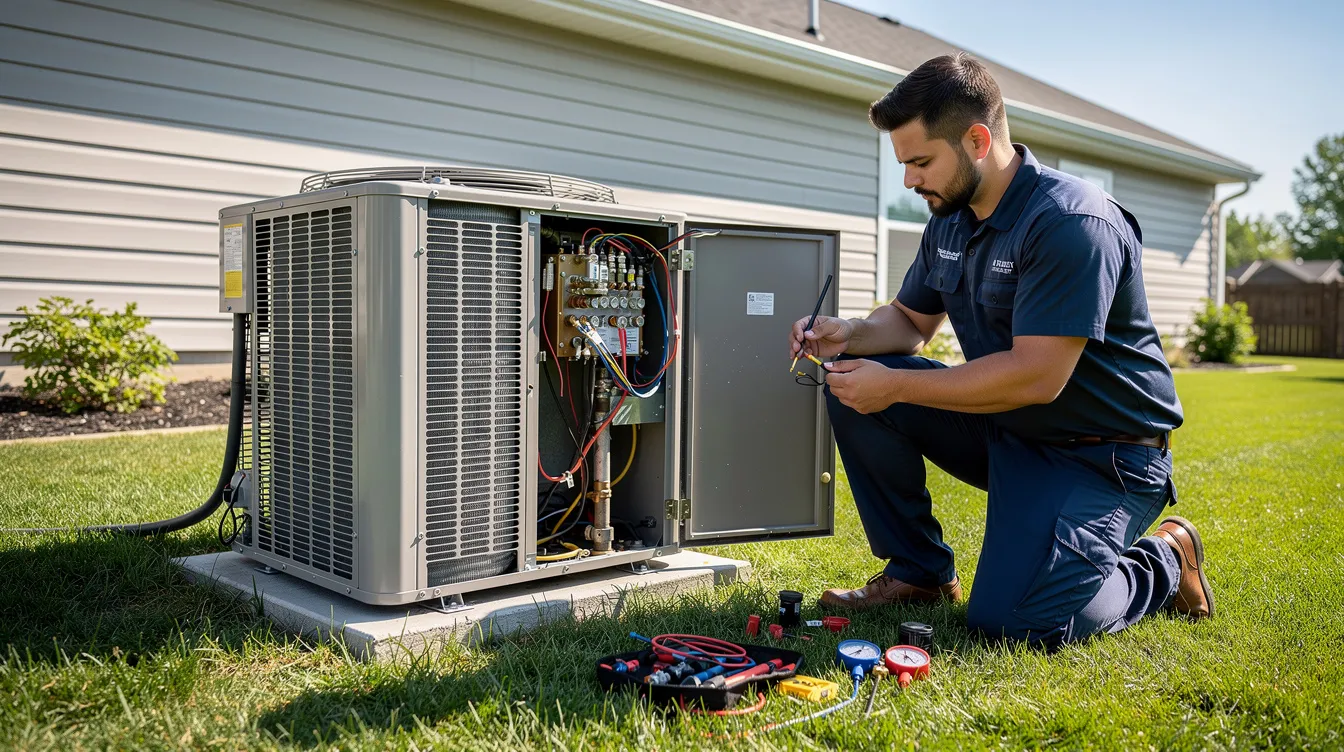
Energy Efficiency: SEER2 Ratings and Humidity Control in Louisiana
SEER2, or Seasonal Energy Efficiency Ratio 2, measures how efficiently an ac system converts electricity into cooling over an entire season. As of 2023, HVAC systems must meet new SEER2 regulations for efficiency. For a 4 ton split system (≥45,000 BTU/hr) in the Southeast, the federal minimum is 13.8 SEER2.
Higher SEER ratings can significantly reduce electricity use in Louisiana’s cooling season, where systems run nearly year round from April through November. ENERGY STAR Most Efficient models start around SEER2 16–17 and above.
Why two-stage and variable-speed technology matters in New Orleans:
- Variable-speed blowers or two-stage compressors are better for humidity management because they run at lower speeds for longer periods, pulling more moisture from indoor air.
- Longer run cycles mean quieter operation and more even temperatures room to room.
- High-efficiency systems can save up to 20% on energy costs compared to minimum-efficiency or aging equipment.
- HVAC systems can save up to 20% on heating and cooling costs when properly matched to the home’s load.
In New Orleans’ humid climate, proper dehumidification from a high-efficiency system can be just as important as raw cooling capacity. A seer rating that looks good on paper means little if the system short-cycles and leaves your house damp.
Ductwork, Airflow, and Indoor Air Quality for 4 Ton Systems
Even the best 4 ton ac unit will underperform if the ducts behind your walls and in your attic are leaky, undersized, or dirty. Duct deficiencies can reduce real delivered efficiency by 10–30%.
Common duct issues in older greater new orleans homes:
- Crushed or disconnected flexible ductwork in hot attics
- Unsealed joints and boot connections
- Undersized return air paths that starve the system of airflow
- Missing or deteriorated duct insulation
A quality ac installation should include checking static pressure, verifying supply and return sizing, and recommending duct repairs or modifications when needed. This is part of proper ACCA Manual D duct design, which is required under Louisiana’s adopted 2021 IECC energy code.
For homeowners concerned about indoor air quality, add-ons like high-MERV filters, UV germicidal lights, or whole-home air cleaners can reduce allergens, mold spores, and odors during heavy cooling seasons. These indoor air quality services are especially valuable in a climate where the hvac system circulates air for the better part of the year.
When a 4 Ton System Isn’t Ideal: Considering Ductless Mini Splits
Ductless mini splits provide flexible heating and cooling solutions without requiring existing ductwork. A ductless mini split system uses an outdoor compressor paired with one or more wall-mounted indoor heads, each controlled independently.
Scenarios where a full 4 ton central air conditioning replacement may not be the best fit:
- Historic Uptown shotgun houses or Creole cottages with no duct infrastructure
- Garages, sunrooms, upstairs bonus rooms, or new additions
- Homes where certain rooms are always too hot or too cold regardless of thermostat settings
Multiple ductless mini indoor heads can be zoned for different rooms, improving comfort and reducing wasted energy in unused spaces. In many cases, a ductless mini system complements a central 4 ton unit, handling hot spots or areas that never cool evenly under the main system alone.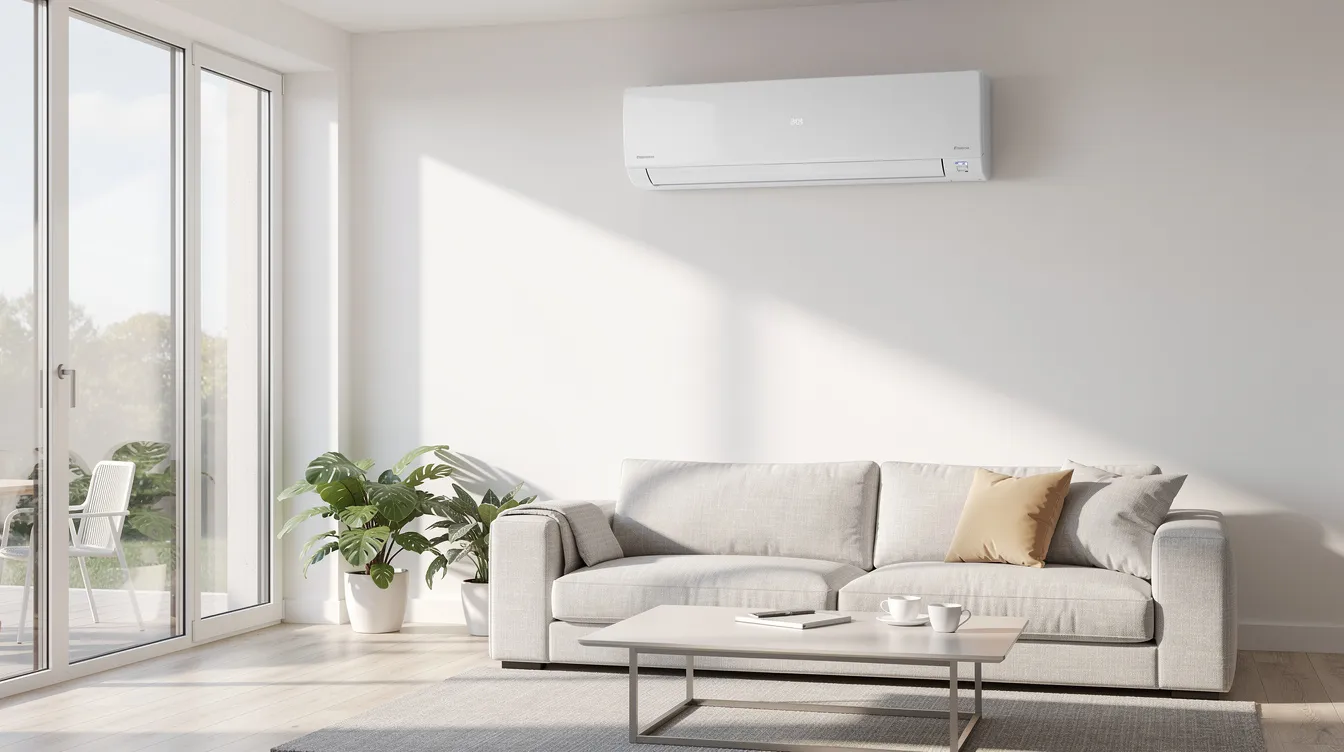
Key Signs It’s Time to Replace Your AC with a New 4 Ton System
Most New Orleans central air systems last about 12–15 years under heavy use before replacement makes more sense than another round of repairs. AC systems over 10 years old often show signs of aging that signal it is time to start planning.
Common warning signs:
- Frequent ac repair calls, especially for different components each time
- Loud compressor noise, rattling, or grinding
- Refrigerant leaks requiring repeated recharges
- Uneven cooling between rooms or floors
- Persistent humidity or musty smells despite filter changes
- Skyrocketing energy bills in summer 2025–2026 even with up-to-date maintenance
Replacing old AC units improves comfort and efficiency significantly. The general rule of thumb: if a major repair would cost half or more of the cost of a new 4 ton ac unit, replacement usually delivers better long-term value. Replacing before the peak of summer also means you avoid emergency breakdowns that can leave you scrambling for AC or heating repair when every technician in the new orleans area is already booked.
Financing Options and Summer 4 Ton AC Specials in Greater New Orleans
A new 4 ton air conditioning system is a major investment, and many New Orleans homeowners use financing to spread the cost over manageable monthly payments. Financing options are available for new HVAC systems through most reputable contractors. Flexible financing options help make HVAC services affordable, and HVAC financing can balance efficiency with affordability so you don’t have to settle for the cheapest equipment.
Typical financing structures:
- Low monthly payment plans over 36–72 months
- Promotional zero or low-interest offers, often available before and during peak cooling season
- Quick credit decisions, sometimes same-day approval
Seasonal summer specials and utility rebates further reduce the total price. Entergy Solutions offers up to $500 back for qualifying high-efficiency central AC replacements, with additional smaller rebates for smart thermostats and tune-ups. Ask specifically about current 2026 promotions and financing options available in your part of the greater new orleans area.
Service Areas for 4 Ton AC Installation & Replacement
Professional installation and air conditioning service are available across the greater new orleans region, covering a full range of surrounding areas and orleans neighborhoods. Service is available for both homeowners and business properties throughout the greater New Orleans area.
Core service cities and parishes:
- New Orleans, Metairie, Kenner, Gretna, Harvey, Marrero, Westwego, and River Ridge
- Belle Chasse, Chalmette, Arabi, and neighborhoods across Jefferson Parish, St. Bernard Parish, and Plaquemines Parish
- Slidell, Mandeville, and Covington in St. Tammany Parish
Some remote areas in LA may have different availability windows or travel fees. Homeowners can call or submit an online form to confirm service coverage and request service for their location.
Choosing the Right New Orleans HVAC Company for Your 4 Ton System
Selecting a licensed, insured new orleans hvac company with real experience installing 4 ton systems in Louisiana’s heat is worth the extra research. The greater new orleans area has a long history of established hvac service providers. General Heating & Air Conditioning has served New Orleans since 1954. HELP Air Conditioning has been serving New Orleans since 1968. Calloway HVAC offers 24/7 emergency HVAC services in New Orleans and provides a one-year warranty on their work.
Qualities to look for in any contractor:
- NATE-certified or factory-trained technicians
- Transparent written estimates with line-item breakdown of equipment, labor, permits, and any ductwork or electrical work
- Strong online reviews from customers in the community
- Clear warranty explanations covering both parts and labor
- Willingness to perform a load calculation and ductwork evaluation before quoting a system size
The value of ongoing maintenance plans should not be overlooked. A locally owned company that offers yearly air conditioning tune-ups, priority ac repair scheduling, and discounts on future services keeps your new system running at peak efficiency for its full lifespan.
Ask potential contractors whether both indoor and outdoor components will be replaced together. Matched systems improve efficiency, reliability, and warranty coverage, and manufacturers usually recommend replacing both to avoid airflow or refrigerant compatibility issues.
Schedule Your AC Estimate in New Orleans
If you are considering a new ac unit, the best next step is a free estimate in your home. A technician will discuss your comfort issues, measure the house, inspect ducts, and present several system and financing options tailored to your specific needs and budget to help keep your home comfortable year round.
What to expect during the estimate visit:
- Discussion of current comfort problems and goals
- Home measurements and load calculation inputs
- Ductwork inspection and condition assessment
- Presentation of good, better, and best system options with clear pricing
- Explanation of available financing and any active summer promotions
Preferred contact methods typically include phone, an online form, or email. Weekday mornings and early evenings tend to offer the most scheduling flexibility.
Replacing an aging system before peak summer helps you avoid emergency breakdowns, restore comfort quickly, and take advantage of current 2026 promotions. No small job is too minor to deserve a proper evaluation, and no homeowner should have to guess at the right system for their home.
Frequently Asked Questions About 4 Ton AC Systems in New Orleans
How long does it take to install a new 4 ton AC system?
Most straightforward 4 ton ac replacements in New Orleans can be completed in one day, typically within 6–10 hours depending on accessibility and ductwork condition. Complex jobs involving electrical upgrades, new duct runs, or relocation of equipment may extend into a second day. Your install team should communicate expected timelines during the estimate visit so you can plan accordingly.
Do I have to replace my furnace or air handler when I install a new 4 ton AC?
While it is technically possible to pair a new 4 ton condenser with an older indoor unit, manufacturers usually recommend replacing matched components together. A mismatched furnace or air handler can reduce efficiency, void warranty coverage, and create refrigerant or airflow compatibility issues. Replacing both gives you the best chance of getting the rated seer rating and reliable performance from your new system. Annual maintenance of HVAC systems includes cleaning coils and draining pans, and matched equipment makes that maintenance more straightforward.
Can a 4 ton system cool both my home and an attached addition?
Sometimes a properly sized 4 ton unit can handle an attached addition, but only if the total cooling load still falls within the equipment capacity after a fresh load calculation. In many cases, a ductless mini split for the new room or sunroom is a more efficient and reliable choice than oversizing the central air conditioning. Oversizing creates the humidity and short-cycling problems discussed earlier.
How often should I schedule maintenance on a 4 ton AC system in New Orleans?
At a minimum, schedule one comprehensive air conditioning service visit per year, ideally in spring before the cooling season ramps up. A general heating and cooling tune-up should include coil cleaning, refrigerant level check, electrical component inspection, and condensate drain flushing. Homeowners who run their systems heavily or live near salt air in coastal areas should consider semiannual checkups for maximum efficiency and longevity.
Is a 4 ton AC system enough for a two-story home in the Greater New Orleans area?
Many two-story homes in the 2,000–2,600 sq ft range can be served by a 4 ton system, but final sizing depends on load calculations and duct design. Some larger or more complex layouts may benefit from zoning or a combination of central air and ductless mini splits to keep upstairs rooms comfortable. A qualified hvac service provider can evaluate whether a single 4 ton system or a supplemental solution delivers the best results for your home.