Commercial HVAC Replacement New Orleans
New Orleans Mechanical Pros provides commercial HVAC replacement for offices, restaurants, retail spaces, warehouses, and other commercial buildings across the greater New Orleans area. Our services cover complete replacement of commercial HVAC systems including rooftop packaged units, split systems
Key Takeaways
New Orleans Mechanical Pros provides commercial HVAC replacement for offices, restaurants, retail spaces, warehouses, and other commercial buildings across the greater New Orleans area. Our services cover complete replacement of commercial HVAC systems including rooftop packaged units, split systems, and any ductwork or electrical modifications needed to support the new equipment.
Replacement of aging or failed commercial HVAC equipment can deliver improved comfort, better energy efficiency, fewer breakdowns, and extended equipment life for commercial building systems.
We focus on minimizing business downtime by coordinating with property managers, general contractors, and facilities teams before, during, and after every project.
Commercial HVAC systems differ significantly from residential AC systems-they require specialized installation and maintenance from skilled technicians with commercial experience.
New Orleans Mechanical Pros also offers commercial HVAC repair, maintenance services, and related commercial services so building owners can manage their entire HVAC lifecycle with one contractor.
We serve the full Orleans area including Metairie, Kenner, Gretna, Harahan, Algiers, and surrounding parishes.
Commercial HVAC Replacement Services in New Orleans
Commercial HVAC replacement is the process of removing aging, inefficient, or failed heating and cooling equipment from a commercial property and installing properly selected replacement systems. For New Orleans businesses, this is not a minor upgrade-it is a service that directly affects daily operation, occupant comfort, and long-term operating costs.
New Orleans Mechanical Pros provides turnkey solutions for commercial HVAC replacement in New Orleans, LA, including:
Replacement of complete commercial HVAC systems: rooftop packaged units, split systems, heat pump systems, and air handling equipment for buildings ranging from neighborhood retail to mid-rise office and hospitality properties.
Service for common New Orleans property types: French Quarter mixed-use buildings, Canal Street offices, Warehouse District lofts, hotels near the Superdome, Gentilly warehouses, and Jefferson Parish retail centers.
Coverage across New Orleans, Metairie, Kenner, Gretna, Harahan, Algiers, and the Northshore for qualifying commercial projects.
Full project planning, permits where required, coordination with building management, and integration with existing commercial building systems and controls. We offer Chiller Repair in and around New Orleans.
Types of Commercial HVAC Systems We Replace
We work on a range of commercial HVAC systems, so whether your building uses a single rooftop unit or a multi-zone setup, your equipment type is covered.
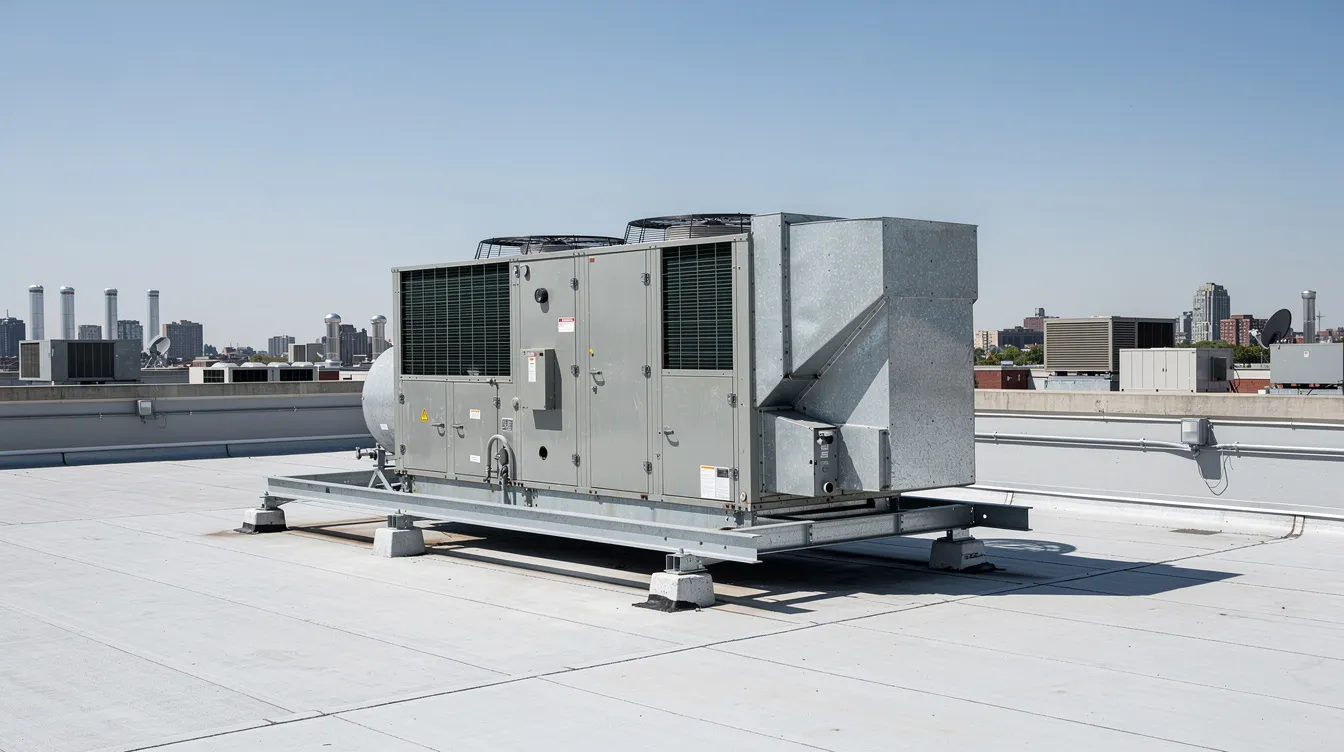
Rooftop packaged units (RTUs): These are the most common commercial HVAC system in the New Orleans area. Packaged systems are all-in-one HVAC units that combine heating and air conditioning in a single rooftop cabinet. Rooftop RTU HVAC systems are installed on roofs and serve restaurants on Magazine Street, strip centers in Metairie, and big-box retail along Airline Drive. Commercial HVAC systems can include rooftop units and split systems depending on building layout and capacity needs.
Split systems and ducted systems: Split systems connect to a building's ductwork and are typically used in smaller offices, medical suites, and neighborhood retail. These pair an outdoor unit (condenser) with an indoor unit (air handler) and share ductwork to distribute conditioned air.
Multi-unit commercial HVAC systems: Multi-tenant buildings often rely on multiple RTUs feeding separate zones or tenants. We phase replacements across units to limit downtime and keep adjacent spaces operational.
Specialized and process-cooling systems: Kitchens, small manufacturing spaces, data rooms, and telecom closets may use specialized commercial HVAC systems tied to refrigeration or process cooling. VRF systems are ductless and use heat pumps, making them suitable for some commercial space applications where traditional ductwork is impractical. Dedicated Outdoor Air Systems (DOAS) can control humidity separately from cooling, which is valuable for buildings with strict indoor air quality requirements.
Commercial HVAC systems serve various business environments, and each building type brings its own demands for capacity, controls, and airflow design.
When Should You Replace a Commercial HVAC System in New Orleans?
New Orleans heat and humidity push commercial HVAC equipment harder than nearly any other climate in the country. With cooling seasons that often stretch 8 to 10 months per year, systems accumulate runtime far faster than the national average-and that accelerates wear on every major component.
Here are the most common signals that a commercial HVAC system is approaching the end of its useful life:
Frequent breakdowns and rising commercial HVAC repair costs. If your system locks out on compressor faults every July through September and you're stacking up service calls, repair costs can quickly exceed the value of the remaining equipment life.
Uneven temperatures or hot spots. Open offices, kitchens, and sales floors that can't hold consistent temperatures often point to aging equipment, failing fans, or ductwork issues that a malfunctioning HVAC system cannot overcome.
Rising energy bills and declining energy efficiency. Watch your Entergy New Orleans bills closely. Long runtimes during peak summer afternoons and climbing costs per square foot often signal that a system is no longer functioning optimally. Dirty filters alone can cause a 21% drop in cooling efficiency, compounding the problem.
Equipment age. Systems older than 12 to 15 years in Gulf Coast climates are typically past their reliable service window, especially if maintenance has been inconsistent. Difficulty sourcing parts for R-22 or obsolete models makes ongoing repair impractical.
Major component failures. Burnt-out compressors, cracked heat exchangers, or heavily corroded coils often signal that replacement is more economical than repeated repair.
Difficulty maintaining indoor humidity. In New Orleans, where summer relative humidity regularly exceeds 80%, a system that can't manage latent load creates mold risk, occupant discomfort, and potential damage to interior finishes. High humidity levels in New Orleans cause mold problems that a failing system simply cannot address.
New Orleans Mechanical Pros can evaluate the HVAC system, review maintenance history, and assess building requirements to recommend whether repair or replacement is the right next step.
Repair vs. Replacement: Choosing the Right Option for Your Building
The decision between repair and replacement depends on cost, equipment age, reliability history, and long-term plans for the property. We help building owners compare both paths with transparent estimates.
When commercial HVAC repair may be reasonable: If the system is relatively new with an isolated component failure-a fan motor, control board, or contactor on an otherwise solid unit-repair usually makes sense. Repair may also be the right call for buildings slated for near-term redevelopment or lease expiration where a major capital investment is hard to justify.
When replacement makes more sense: Repeated refrigerant leaks, obsolete R-22 equipment, significant corrosion from rooftop exposure, and frequent service calls all point toward replacement. When repair costs approach 40 to 50% of the cost of a new HVAC system, replacement typically delivers better long-term value.
A typical New Orleans scenario: Consider a 15-year-old, 20-ton RTU on a Lakeview shopping center. The unit has required two compressor repairs in a single summer, and energy bills have spiked roughly 25% over prior years despite regular filter changes. At that point, the accumulated repair costs, rising energy consumption, and risk of a mid-summer failure during peak business season make replacement the more practical path. A new HVAC system, including crane lift, curb adapter, duct sealing, and controls, may carry a higher upfront cost-but amortized over a new 15-year service life, total annual operating and maintenance costs typically drop substantially.
We provide estimates for both repair and replacement and can phase work to minimize disruption for tenants and customers.
Our Commercial HVAC Replacement Process
New Orleans Mechanical Pros follows a structured process for every commercial HVAC replacement project in New Orleans and surrounding parishes.Replacing a commercial HVAC system is a major capital project, and each step matters.
Site evaluation. Expert technicians assess building needs before HVAC installation. We inspect existing HVAC equipment, roof conditions, ductwork, gas and electrical connections, condensate drainage, and access limitations such as tight alleys, historic facades, or limited crane clearance. The installation process requires comprehensive permitting and inspections, and we identify those requirements early.
Equipment selection. We determine replacement HVAC requirements based on building size, occupancy, internal heat loads from cooking or equipment, ventilation needs, and local code requirements-not just matching the old nameplate tonnage. Equipment must be sized to handle high latent moisture loads, which is non-negotiable in New Orleans. Energy efficiency standards like ASHRAE 90.1 apply to commercial HVAC systems in Louisiana and guide minimum performance thresholds for new installations.
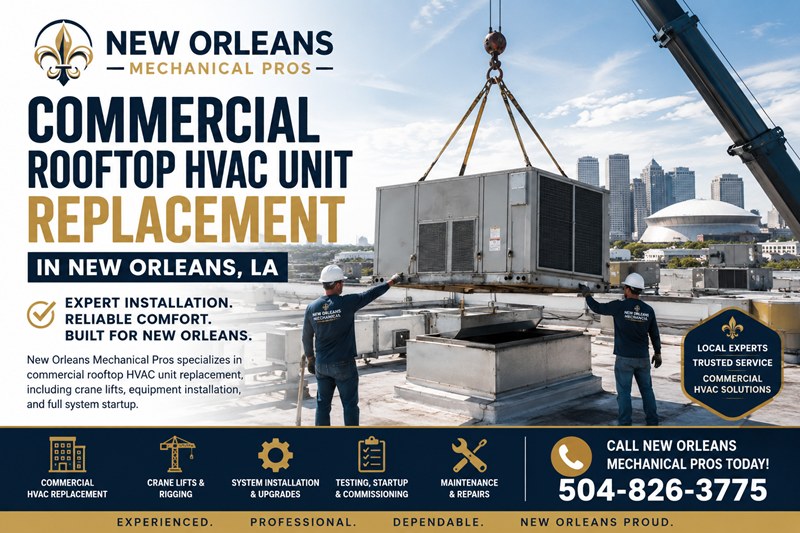
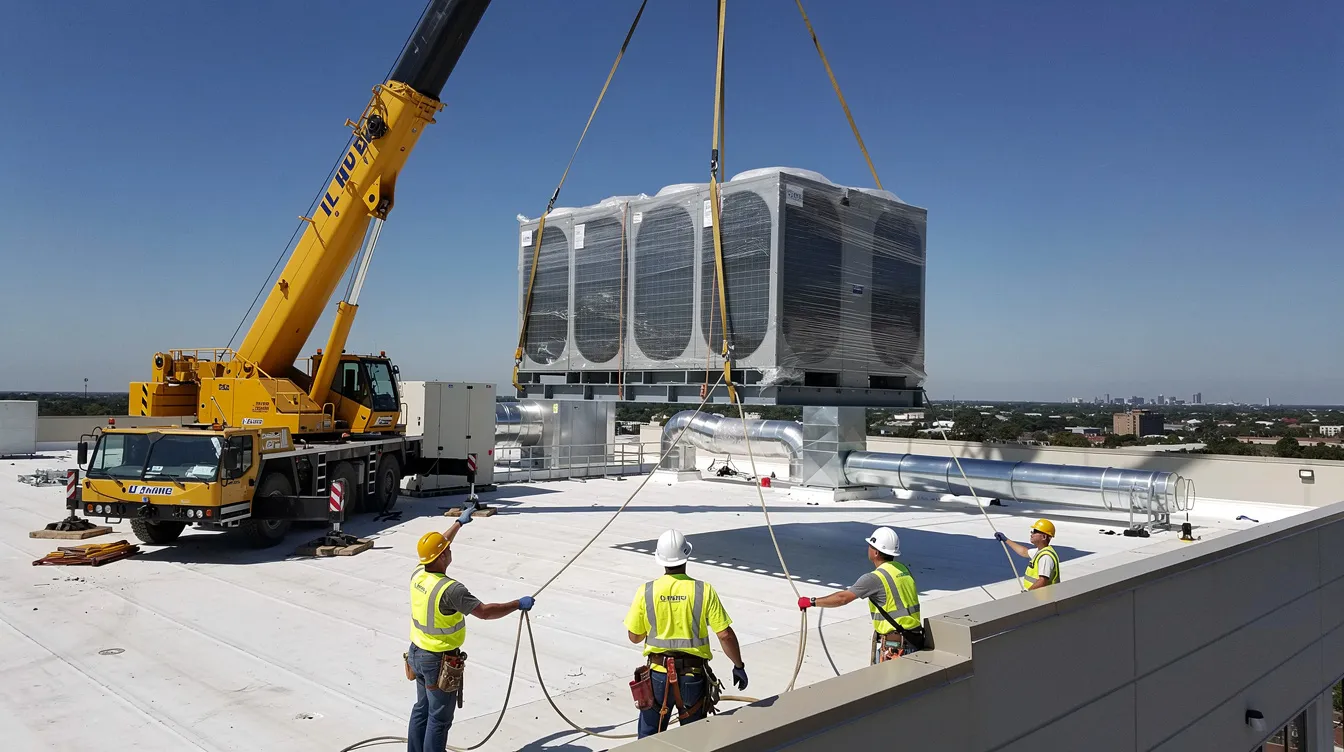
Planning and scheduling. We coordinate around business hours-performing crane work on early weekend mornings in the CBD, for example, to avoid traffic congestion and tenant disruption. Delivery, crane permits, and crew schedules are locked in before work begins.
Removal of existing equipment. HVAC replacement involves safely removing the old unit first. We disconnect electrical, gas, controls, ductwork, and condensate lines, then recover refrigerant per EPA Section 608 requirements. Old equipment is removed via crane and recycled or disposed of responsibly according to Louisiana regulations.
Installation. We set the new unit, secure it to the existing or modified roof curb, and connect ductwork, gas lines, electrical power, controls, and condensate drainage. Proper condensate management is essential in humid climates, and we size drains and traps for New Orleans rainfall intensity. Rooftop units must comply with local wind-load requirements, and all connections are inspected before startup.
Startup, testing, and commissioning. We verify airflow, temperature splits, thermostat and control operation, and safety interlocks. Proper HVAC installation minimizes future complications and downtime, so commissioning is thorough-not a formality. HVAC systems in New Orleans must follow strict local building codes, and final inspections confirm compliance before we turn the system over to the owner.
Energy Efficiency and Operating Cost Benefits
New HVAC systems can significantly improve energy efficiency, which matters in a city where the air conditioning system may run the majority of the year.
Modern commercial HVAC equipment carries higher SEER, EER, and IEER ratings than units manufactured even a decade ago. For offices, restaurants, and retail spaces, this translates to measurably lower electricity consumption per ton of cooling.
Variable-speed compressors help in optimal moisture removal and efficiency by adjusting output to match real-time demand rather than cycling on and off at full capacity. Modern fan technologies, including ECM blower motors, further improve part-load performance and reduce noise in occupied commercial spaces.
Upgraded controls-smart thermostats or building automation systems-allow better management of temperatures, schedules, and setbacks during nights, weekends, and holidays. This level of control was uncommon in systems installed 15 years ago.
Efficiency gains also depend on ductwork integrity, proper refrigerant charge, and regular commercial HVAC maintenance. A new unit connected to leaking ducts or running with incorrect charge will underperform its ratings.
While we avoid quoting specific savings percentages without project data, the combination of lower energy costs and reduced repair frequency often helps offset the cost of replacement over the equipment life.
Minimizing Business Downtime During HVAC Replacement
If your business depends on keeping doors open and customers comfortable, downtime during an HVAC replacement is a serious concern. We design every commercial HVAC replacement project around business operations-not the other way around.
We pre-plan with property managers to coordinate schedules, tenant notifications, and access for cranes, delivery trucks, and skilled technicians.
Noisy or disruptive work-crane lifts, saw-cutting, heavy rigging-is scheduled during off-hours or weekends. Early Sunday morning lifts in downtown New Orleans are a common approach for projects in the CBD or French Quarter where weekday access is restricted.
For critical areas such as server rooms, kitchens, or high-traffic lobbies, we arrange temporary cooling or zoning strategies to maintain reasonable conditions during changeout work, providing peace of mind for tenants and staff.
Safety and cleanliness measures include barricades, signage, and protection for interior finishes in occupied buildings, ensuring minimal disruption to daily operations.
Clear communication and single-point-of-contact project management from New Orleans Mechanical Pros keep everyone-owners, tenants, general contractors-informed from start to finish. Our goal is to deliver every project in a timely manner without surprises.
Commercial Buildings and Industries We Serve
Different commercial property types in New Orleans bring different HVAC replacement needs. Here is how we approach each:
Retail stores and shopping centers. Strip malls along Veterans Boulevard and neighborhood shops need evenly cooled sales floors and reliable system running during business hours. Customer satisfaction drops quickly in a hot store.
Restaurants and hospitality. Dining rooms in the French Quarter, Marigny, and Uptown require dependable air conditioning alongside kitchen ventilation that handles extreme heat loads. A restaurant's business depends on guest comfort as much as food quality.
Office buildings and professional suites. Downtown towers and suburban business parks need zoned cooling, conference room comfort, and after-hours operation for tenants with non-standard schedules.
Warehouses and light industrial. Facilities near the port and along I-10 require ventilation, spot cooling, and climate control to protect inventory or sensitive equipment.
Medical offices, clinics, schools, and institutional properties. These buildings have tighter indoor air quality, temperature, and humidity requirements-sometimes governed by standards like ASHRAE 170 for healthcare.
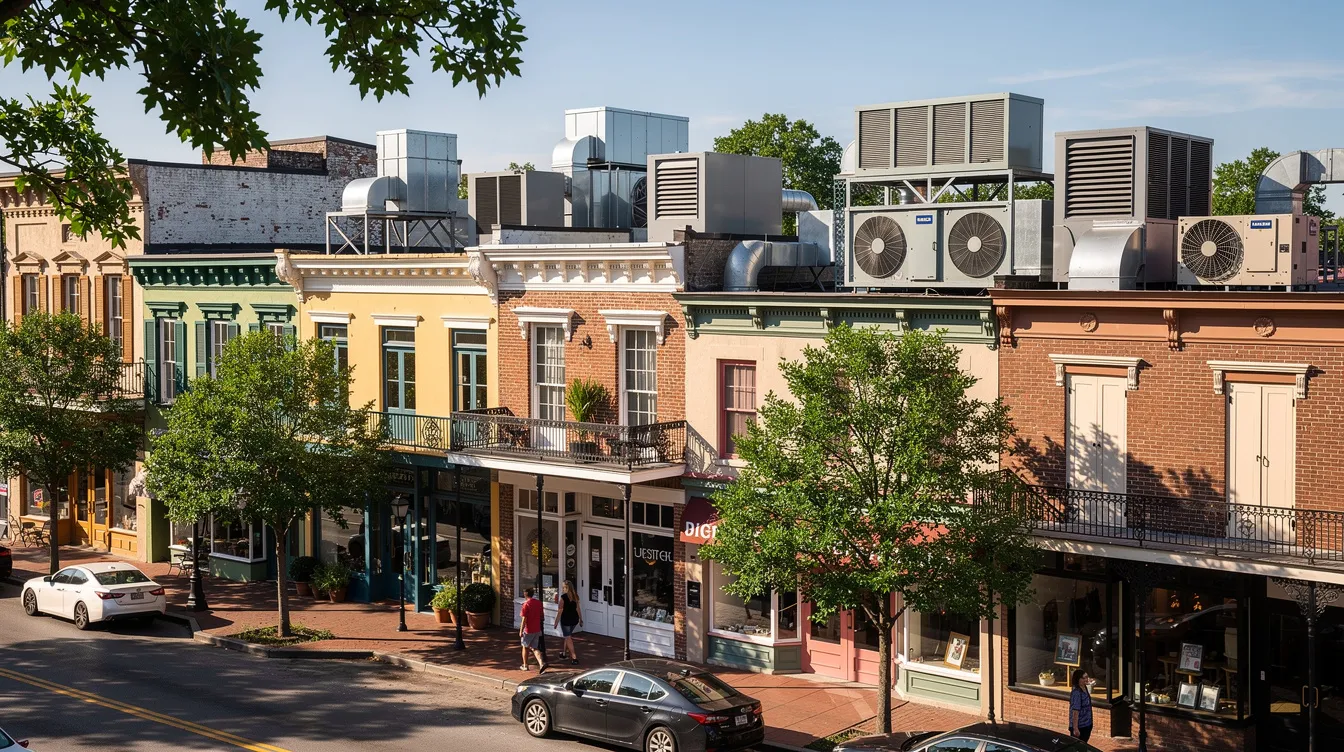
Mixed-use and historic buildings. We understand the challenges of limited roof access, structural constraints, and preservation concerns that come with older New Orleans construction. These projects require careful planning and often creative solutions for crane access and equipment placement.
How New Orleans Climate Impacts Commercial HVAC Systems
New Orleans has a subtropical climate affecting HVAC system design at every level-from equipment selection to condensate routing to maintenance intervals.
Long cooling seasons. Cooling demand often runs from April through October, and sometimes year round comfort requires supplemental cooling even in mild winter stretches. Extended runtimes accelerate wear on compressors, fan motors, and contactors, shortening equipment life compared to systems in cooler, drier regions.
High humidity and dehumidification. In many Gulf Coast buildings, nearly half of air conditioning energy goes toward latent cooling-removing moisture from the air. Without proper dehumidification, buildings face mold growth, occupant complaints, and damage to finishes and furnishings. Equipment must be sized to handle high latent moisture loads, not just sensible temperature reduction.
Rooftop exposure. Corrosion protection is necessary due to coastal air in New Orleans. Salt-laden wind, intense sun, and heavy rain degrade coils, cabinet panels, and roof curbs faster than in inland markets. Manufacturers offer "coastal series" units with coated coils and weatherproof cabinets specifically for environments like ours.
Condensate and flood exposure. Properly sized condensate drainage is essential in a city that receives over 60 inches of rain annually. Flood exposure considerations are critical in HVAC planning for New Orleans-equipment placement, electrical connections, and drainage paths should all account for the possibility of standing water.
Why local experience matters. These climate factors are exactly why working with a commercial HVAC contractor familiar with New Orleans conditions is essential. A contractor from a drier climate may not account for the specific needs of latent load management, corrosion resistance, or local code requirements that affect long-term performance.
Commercial HVAC Replacement, Repair, and Maintenance Services
New Orleans Mechanical Pros is a long-term partner for the full lifecycle of your commercial HVAC system-not just a one-time replacement contractor.
Commercial HVAC repair. We respond to no-cool calls, fan failures, thermostat problems, refrigerant leaks, and other urgent issues with prompt response times aimed at getting your system running again quickly. Commercial HVAC repair services are available 24/7 for emergencies.
Preventive maintenance programs. Routine maintenance prevents costly repairs and replacements. Our maintenance services include seasonal inspections, coil cleaning, filter changes, refrigerant checks, and performance evaluations tailored to high-usage New Orleans buildings. Regular maintenance can lower energy costs by up to 40 percent, and regular checks extend the equipment's operational lifespan significantly. Regular inspections help prevent costly repairs in commercial HVAC systems before small problems become emergency shutdowns.
Lifecycle planning. Maintaining HVAC systems ensures consistent air conditioning performance over the life of the equipment. Our maintenance programs help identify developing issues early-so you can budget for replacement on your terms rather than reacting to a catastrophic failure.
We service most major commercial HVAC brands commonly installed in local commercial buildings and can provide maintenance agreements for multi-site portfolios, including regional retail chains, property management firms, and commercial clients with buildings across the greater New Orleans area.
Commercial HVAC Contractor Selection in New Orleans
Choosing the right commercial HVAC contractor affects long-term comfort, equipment reliability, and operating costs. Here is what to look for:
Licensing and insurance. Contractors must be licensed by the Louisiana State Licensing Board for Contractors (LSLBC) for commercial mechanical work. Verify that any contractor you consider holds proper licensing, carries adequate insurance, and follows documented safety practices for commercial HVAC work and crane operations. Building owners may also prefer NATE Certified technicians as an added sign of ongoing HVAC training and tested expertise.
Commercial experience. Look for a contractor with direct experience on commercial HVAC systems-rooftop units, large split systems, and coordination with commercial plumbing or electrical trades where applicable. Residential heating and cooling experience alone does not qualify a contractor for commercial-scale work.
Local knowledge. Select a contractor with proven experience working in New Orleans building types, local permitting processes, and historic-district constraints. This is an essential part of getting the project done right.
Clear proposals. Strong communication, detailed scopes of work, and transparent pricing mean you know exactly what is included. Avoid vague estimates that leave room for scope creep.
New Orleans Mechanical Pros meets each of these criteria. We focus on commercial clients, bring direct rooftop replacement experience across the Orleans area, and deliver detailed proposals with realistic schedules. We do not make unverifiable claims-we focus on capability, responsiveness, and results.
Cost Factors for Commercial HVAC Replacement in New Orleans
Commercial HVAC replacement costs vary by building and system, so a site-specific evaluation is always required rather than flat pricing. Selecting HVAC systems for commercial buildings should consider total cost of ownership-not just the sticker price of the unit.
System size and type. Tonnage, equipment type (RTU vs. split system vs. heat pump), and chosen energy efficiency ratings are the primary cost drivers. National benchmarks place commercial replacement costs at roughly $2,800 to $3,000 per cooling ton, but New Orleans projects often carry a 10 to 30% premium due to climate, access, and corrosion-protection requirements.
Installation complexity. Crane requirements in tight downtown streets, roof height, curb modifications or curb adapters, structural reinforcement, and mechanical room accessibility all affect labor and logistics costs.
Additional work. Ductwork repairs, electrical upgrades, gas piping adjustments, and controls or thermostat replacements add to the project scope. AC repair services or partial duct sealing during the replacement can improve overall system performance.
Soft costs. Permits, inspections, disposal of old equipment, and any after-hours labor premiums to keep businesses operating during the day should be factored into the budget.
Contact New Orleans Mechanical Pros for an on-site assessment and a detailed commercial HVAC replacement proposal tailored to your building's specific needs.
Benefits of Proactive Commercial HVAC Replacement
Planning replacement before a complete failure helps you control cost, schedule, and business impact.
Improved reliability. Replacing aging equipment before it fails eliminates the risk of emergency shutdowns during peak summer heat, when replacement units are harder to source quickly and lead times stretch.
Better comfort and customer satisfaction. More even temperatures and effective humidity control boost employee productivity and keep customers comfortable in offices, restaurants, and retail spaces.
Alignment with current building use. A new HVAC system can be matched to today's tenant mix, occupancy patterns, and property management strategies rather than a legacy design from decades past. New construction or major renovations are ideal opportunities to right-size the system.
Easier maintenance and parts availability. Newer equipment means readily available parts, faster repairs, and better long-term service support. This helps extend equipment life and keeps the system working properly for years.
Budget and schedule control. Proactive replacement can be budgeted, scheduled, and phased-avoiding surprise failures that force rushed decisions and premium pricing.
Commercial HVAC Replacement Service Areas in and Around New Orleans
New Orleans Mechanical Pros serves a wide range of commercial clients throughout the greater New Orleans area.
Primary service zones: New Orleans proper (French Quarter, CBD, Uptown, Mid-City, Bywater), Metairie, Kenner, Harahan, and Jefferson Parish corridors along Veterans Boulevard and Airline Drive.
Westbank: We serve Gretna, Harvey, and Algiers, with attention to bridge and traffic considerations for crane scheduling and equipment delivery.
Northshore and regional projects: We support select Northshore and regional projects for existing commercial customers or multi-location accounts when appropriate.
Our familiarity with local utilities, inspection departments, and typical commercial construction practices in the region means fewer delays, smoother permitting, and better coordination on every project. We serve commercial clients who need services in New Orleans and the surrounding parishes.
Why Choose New Orleans Mechanical Pros for Commercial HVAC Replacement
New Orleans Mechanical Pros is a dedicated commercial HVAC contractor focused on replacement, repair, and maintenance for New Orleans businesses.
We bring direct experience working with commercial building systems, including HVAC equipment, limited commercial plumbing tie-ins, backflow prevention where applicable, and coordination with electricians for panel and power upgrades.
Our commitment to clear communication, detailed proposals, and realistic schedules means your operation and tenant needs are accounted for from the first conversation.
We coordinate with general contractors, facility managers, and property management firms on larger or phased replacement projects-providing the kind of installation services that complex commercial projects demand. The demands forchiller repair services in New Orleans are high.
After installation, we provide ongoing support: warranty service, seasonal tune ups, and performance check-ins during the first cooling season to confirm your system is delivering peak performance.
Expert technicians, transparent pricing, and a focus on long-term commercial HVAC solutions set us apart. Contact New Orleans Mechanical Pros to discuss your upcoming commercial HVAC replacement needs in the New Orleans area.
Frequently Asked Questions About Commercial HVAC Replacement in New Orleans
How far in advance should I plan a commercial HVAC replacement project?
Many New Orleans businesses start planning 3 to 6 months before their busiest season, allowing time for equipment selection, permitting, and scheduling cranes or shutdowns. Lead times can increase during peak summer months or during supply-chain constraints, so earlier planning gives more flexibility and often better pricing options. Brandon Lagarde and our project team can help you establish a realistic timeline based on your building and business calendar.
Can my business stay open while the commercial HVAC system is being replaced?
In most cases, businesses can remain open during replacement-especially offices, retail spaces, and some restaurants. Short periods without cooling may be required during specific phases of the changeout. We use strategies like off-hours work, temporary cooling in key areas, and phased replacements across multiple units to maintain reasonable comfort and safety throughout the project.
Do I need to replace ductwork when I replace my commercial HVAC unit?
Not all projects require duct replacement. However, older or damaged ductwork, poor airflow, or major layout changes may justify repairs or upgrades at the same time. New Orleans Mechanical Pros inspects existing ductwork and recommends targeted sealing, insulation, or redesign when it will significantly improve the performance of the new system. Ignoring duct problems can undermine the efficiency gains of a new HVAC unit.
Can a more efficient HVAC system help control indoor humidity in New Orleans?
Modern commercial HVAC systems with proper sizing, controls, and coil design can meaningfully improve dehumidification, especially when paired with good airflow and ventilation practices. System design, runtime management, and routine maintenance are just as important as the equipment itself for keeping humidity in a comfortable range. In some cases, DOAS or supplemental dehumidification may be recommended for buildings with unusually high moisture loads.
What information should I have ready before requesting a commercial HVAC replacement quote?
Gather your building size, existing equipment model and tonnage if available, recent utility bills, known comfort issues, and any planned renovations or occupancy changes. This helps us prepare a more accurate initial assessment. New Orleans Mechanical Pros also performs a thorough on-site evaluation to verify details, inspect the roof and mechanical systems, and discuss your business priorities before preparing a proposal. Having this information ready helps us deliver responsive, accurate recommendations for your commercial space.