
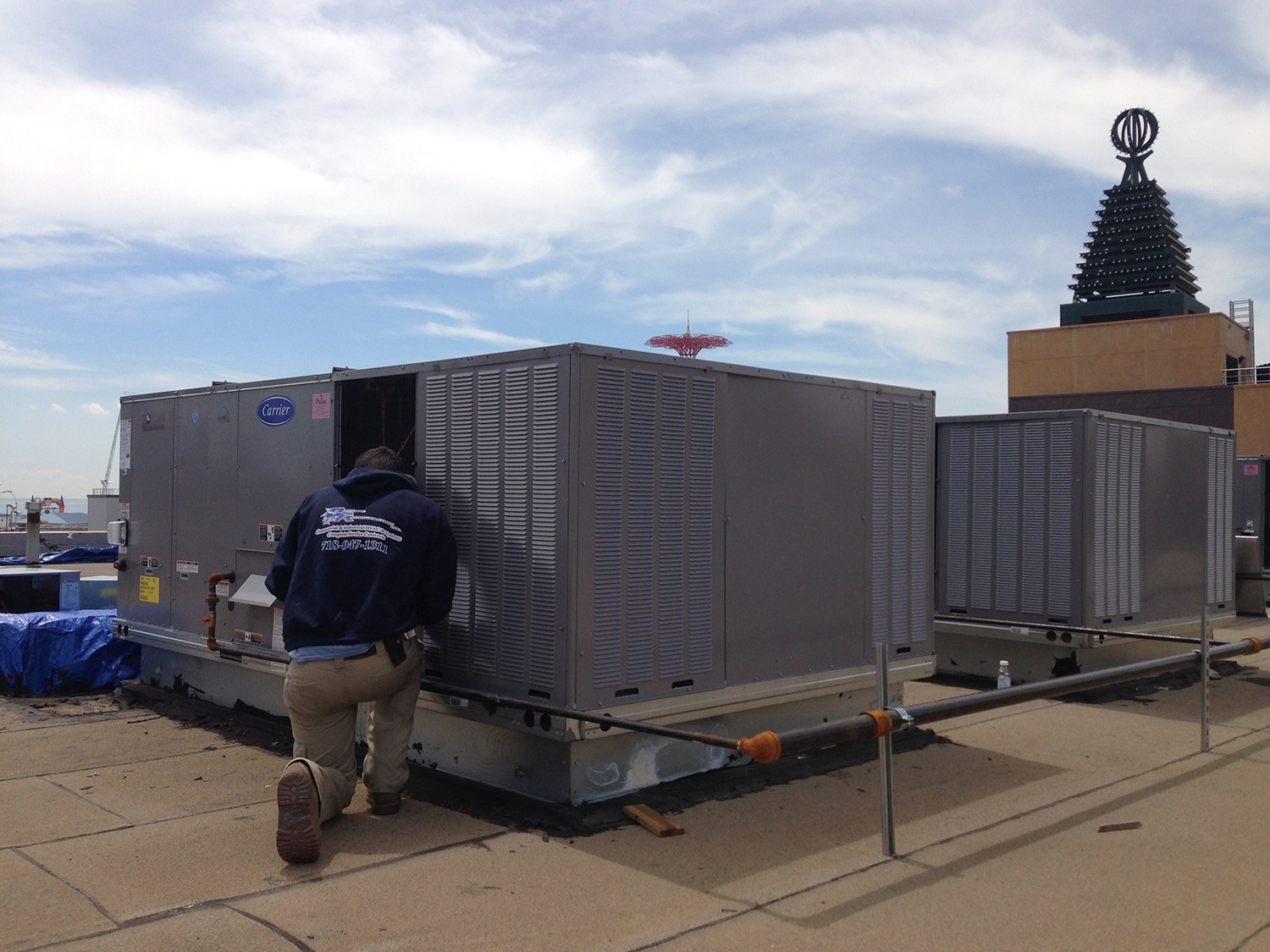
New Orleans restaurants need HVAC systems that remove kitchen heat, control humidity, balance exhaust and make-up air, and keep dining rooms comfortable while meeting health code expectations. New Orleans Mechanical Pros designs, repairs, and maintains restaurant HVAC, kitchen ventilation, and emergency cooling systems for kitchens, bars, cafes, and dining rooms across Orleans Parish daily citywide.
Restaurants in New Orleans ask more from heating, cooling, and ventilation systems than almost any other commercial property type. Lunch rushes spike kitchen temperatures, dinner service stretches equipment into the evening, and our humidity never really gives operators a break. New Orleans Mechanical Pros helps restaurant owners, chefs, hospitality groups, and property managers keep kitchens safe, dining rooms comfortable, and equipment reliable with specialized commercial HVAC service built for food service environments.
Our team serves independent restaurants, bars, cafes, bakeries, quick-service counters, hotel restaurants, ghost kitchens, and multi-unit concepts across the metro. We are based at 1615 Poydras St Ste 900, New Orleans, LA 70112, and our technicians bring 17+ years of field experience backed by LA Lic. #75402, NATE certified training, EPA 608 certification, BBB accreditation, and ACCA membership. If your kitchen hood is underperforming, your dining room feels damp, or your rooftop unit quits during Friday service, call (504) 826-3775.
Why restaurant HVAC in New Orleans requires a different playbook
Heat, humidity, grease load, and occupancy all peak at once
A restaurant system does not fail one variable at a time. During service, grills, fryers, ovens, dish machines, and bodies in the dining room all load the building simultaneously. In New Orleans, that stress lands on top of outdoor air that is already warm and moisture-heavy. A unit that is oversized, poorly balanced, or neglected may cool the thermostat area while leaving the line cooks sweating, the entry doors pulling inward, and the front tables feeling sticky. That is why restaurant HVAC has to be engineered around airflow, latent load, and pressure relationships rather than simple square footage.
Historic buildings and entertainment corridors add complexity
Conditions change block by block. A restaurant in the French Quarter or along Bourbon Street may be operating inside an older masonry shell with limited shaft space and rooftop access. A bistro off Magazine Street in 70115 might need quieter equipment because patio and dining acoustics matter. A converted corner store in Mid-City 70119 or the Bywater 70117 may have uneven insulation, old duct paths, and mixed-use neighbors above. We plan for these realities instead of forcing a generic package onto a very local problem.
Dining room comfort affects guest behavior
Customers notice temperature drift fast, especially in a city where people expect long meals, cocktails, and repeat visits. If the dining room is muggy, if the front windows sweat, or if smoke odors bleed out of the kitchen, guests shorten their stay and staff morale drops with them. Good restaurant HVAC protects ticket averages, online reviews, and labor retention just as much as it protects equipment.
Commercial kitchen ventilation that supports safety and health code readiness
Kitchen exhaust and make-up air have to work as one system
One of the most common restaurant complaints on owner and facilities forums is that the hood “works” but the building still feels wrong. Usually the exhaust fan is pulling air without properly matched make-up air. That imbalance creates negative pressure, slams exterior doors, disrupts pilot lights, pulls hot outdoor air through cracks, and drags kitchen odors into the dining room. We test the full system, not just one fan, so exhaust volume, replacement air, filtration, and distribution stay coordinated during peak service.
Type I hoods, grease duct paths, and discharge points matter
Restaurants using fryers, griddles, charbroilers, ranges, or wok lines need grease-rated capture and containment that actually matches the cooking line. We inspect hood dimensions, filter condition, fan performance, belt wear, duct cleanliness, and discharge location. We also look for practical field issues that trip operators up, such as make-up air diffusers blowing directly across a hood face and breaking capture. For ventilation benchmarks and technical guidance, operators often reference ASHRAE, but field performance still comes down to how the system is installed, balanced, and maintained in your building.
Health code compliance is easier when temperatures are controlled
Food service inspections do not happen in a vacuum. When the kitchen runs too hot or the HVAC cannot remove moisture, product holding areas, prep zones, dry storage, and employee comfort all suffer. We help owners correct issues that lead to recurring complaints, including hot spots near expo windows, insufficient airflow in dish rooms, condensation near walk-ins, and odor migration into guest areas. For indoor air guidance and contaminant control principles, the EPA indoor air quality resources are useful, but restaurants need those principles translated into real service decisions on roofs, in ceiling cavities, and over cooking lines.
Kitchen exhaust balancing for New Orleans restaurant layouts
Second-generation restaurant spaces often inherit mismatched equipment from prior tenants. We regularly find undersized hood fans, oversized condensers, abandoned duct runs, and patched controls in spaces near Decatur Street, Freret Street, and the Warehouse District 70130. Balancing solves more than comfort. It helps hood capture, stabilizes temperatures, limits grease spread, and reduces strain on compressors and motors that would otherwise short cycle under unstable building pressure.
Dining room cooling, dehumidification, and odor control
Comfort starts with moisture control, not just low supply air temperature
Many restaurant owners think the dining room is comfortable if the thermostat reads low enough. In South Louisiana, guests feel humidity first. A room can say 72 and still feel clammy if the unit is not removing enough moisture or if humid outside air is constantly leaking in. We evaluate sensible and latent load together, then correct coil performance, airflow, staging, drainage, and controls so the dining room feels dry, steady, and clean during lunch, happy hour, and late-night service.
Odor migration is usually an airflow problem
When fry oil, char smoke, or dish room moisture shows up at the host stand, the root cause is rarely “bad luck.” It is normally pressure imbalance, return placement, or poor separation between back-of-house and front-of-house zones. We use zoning, diffuser placement, and duct adjustments to keep the guest experience distinct from the kitchen work environment. Restaurants in open-plan spaces, courtyard properties, and mixed-use storefronts benefit most from this kind of tuning.
Energy efficiency still matters in a high-demand kitchen
Restaurant operators cannot eliminate demand, but they can stop paying for waste. Dirty condenser coils, low refrigerant charge, drifting controls, and neglected belts quietly raise monthly costs before they trigger a visible breakdown. The U.S. Department of Energy publishes practical efficiency guidance, and we apply the same discipline in commercial settings by cleaning heat-transfer surfaces, correcting airflow, tightening schedules, and recommending upgrades only when operating data supports the decision.
Repair, maintenance, and replacement for restaurant operators
Emergency repairs for service-interrupting failures
When a rooftop unit goes down before dinner, a kitchen fan stops pulling, or the dining room starts climbing above setpoint at 5 p.m., you need a crew that understands the cost of every lost hour. We respond to restaurant HVAC emergencies across Downtown, the CBD 70112 and 70113, Uptown, Lakeview, Metairie, and nearby parishes with troubleshooting that focuses on restoring safe operation first. That may include compressor diagnostics, fan motor replacement, belt and bearing repair, drain clearing, control repair, or temporary operating adjustments while parts are sourced.
Preventive maintenance protects uptime and product quality
Restaurants should not be waiting for first failure in July. Our maintenance programs focus on the parts and conditions that punish food service equipment hardest: grease contamination, clogged filters, blocked drains, weak capacitors, worn contactors, loose fan assemblies, fouled evaporator coils, and unstable economizer sections. We also verify airflow to dining rooms, prep spaces, bars, and offices so the system serves the whole operation, not just the thermostat wall. Owners who want structured upkeep should review our preventive maintenance options and our broader commercial HVAC capabilities.
Replacement projects should solve operational problems, not just swap boxes
A restaurant replacement project is the right time to fix long-running complaints. If your current unit never held humidity, if the hood always struggled on busy nights, or if duct paths were compromised during a previous tenant buildout, a like-for-like replacement will preserve the same weakness. We review load, kitchen exhaust, return strategy, controls, tenant constraints, and service access before proposing upgrades. Related solutions often include rooftop HVAC replacement, ductwork correction, commercial refrigeration coordination, and emergency HVAC support.
Local knowledge for New Orleans restaurant properties
We plan around neighborhood conditions and building type
Restaurants in the Quarter deal with access restrictions, preservation concerns, and dense nighttime occupancy. Operators in the Garden District and along St. Charles Avenue often work within older envelopes where duct retrofits must be thoughtful. Fast-casual spaces in 70119 and 70118 may have compact roof footprints and shared tenant utilities. Hotel restaurants in 70130 need coordination with guest comfort above and beside the venue. We build service plans around these differences because what works in a suburban strip center does not automatically fit a Bourbon Street restaurant, a Marigny wine bar, or a Carrollton Avenue cafe.
Our service area includes Greater New Orleans, Jefferson Parish, St. Bernard Parish, and St. Tammany Parish, but our day-to-day work is shaped by local street-level realities: late delivery windows, limited alley access, rooftop corrosion, storm impacts, and the way humidity lingers after summer rainfall. That experience matters when you are trying to keep a dining room comfortable at 7 p.m. on a Saturday in August.
Why restaurants choose New Orleans Mechanical Pros
Credibility matters when uptime is on the line
New Orleans Mechanical Pros was founded in 2023, but our technicians bring more than 17 years of practical field experience in commercial HVAC and ventilation. We hold LA Lic. #75402, employ NATE-certified technicians, and support food service clients with code-aware service that respects operations, staff safety, and guest comfort. We do not sell restaurant owners vague promises. We inspect, test, document, and explain what is happening in language operators can use.
We communicate like a service partner, not a mystery invoice
Restaurant operators are already managing vendors, payroll, supply chains, and staffing gaps. Our job is to make HVAC simpler. That means clear scope, honest repair-versus-replace recommendations, photos when needed, and maintenance notes your team can actually reference later. If you run a single dining room or multiple concepts, we are ready to support your operation from our office at 1615 Poydras St Ste 900, New Orleans, LA 70112. Call (504) 826-3775 to schedule service.
Related commercial services and industry expertise
Restaurant operators often oversee or compare multiple building types. You can explore our work for hotels, restaurants, hospitals, industrial facilities, schools, apartment complexes, property management portfolios, churches, warehouses, government buildings, and office buildings. If you manage several asset classes, that cross-sector perspective helps us standardize service expectations without ignoring the special demands of a commercial kitchen.
Restaurant HVAC FAQs
Does a New Orleans restaurant really need make-up air if the hood already exhausts smoke?
Yes. Without properly sized make-up air, the hood can pull the building negative, reduce capture, overwork cooling equipment, and make doors hard to open during service.
Why does my dining room feel humid even when the thermostat says 72?
That usually points to poor moisture removal, outside-air infiltration, or an airflow problem. Restaurants need humidity control, not just low air temperature.
Can a failed kitchen exhaust fan shut down service?
It can. If smoke, grease vapor, or heat are not being removed correctly, operating the line may create safety and inspection issues that should be corrected immediately.
Why does the front door get hard to open during dinner rush?
That is a classic sign of negative pressure. The hood is often exhausting more air than the building is receiving back through make-up air.
How often should restaurant HVAC and hood-related equipment be checked?
High-demand kitchens benefit from scheduled inspections throughout the year, especially before summer, festival season, and holiday traffic when failures are most disruptive.
Can rooftop units and walk-in refrigeration problems affect each other?
Yes. Hot kitchens, poor ventilation, and unstable room conditions can increase strain on refrigeration equipment and make temperature control harder across the whole operation.
Is uneven dining room temperature usually a duct issue or an equipment issue?
Either one is possible. We often find a mix of bad balancing, poor diffuser placement, restricted ducts, and aging equipment that no longer matches the current layout.
What is the biggest HVAC mistake in second-generation restaurant buildouts?
Keeping inherited equipment and airflow design without testing whether it matches the new menu, cooking line, occupancy, and seating plan. That shortcut causes many repeat problems.
Top HVAC Brands We Service for Commercial Clients
Our certified technicians are factory-trained on all major commercial HVAC brands:
Related HVAC Articles & Guides
Frequently Asked Questions — New Orleans Restaurant HVAC & Commercial Kitchen Ventilation in New Orleans
8 questions answered by our licensed commercial HVAC team
Answers to the most common questions from New Orleans commercial property managers, restaurant operators, and business owners about new orleans restaurant hvac & commercial kitchen ventilation in Greater New Orleans.
Have a specific commercial HVAC question? Contact our commercial team or call +1 504 826 3775 for a free commercial assessment.