
Emergency Boiler Repair New Orleans: When Do You Need It?
Oct 25, 2026 · New Orleans Mechanical Pros
Key Takeaways
Knowing the difference between a routine boiler issue and a genuine emergency can protect your family, your tenants, or your business from serious harm. Here is what every New Orleans boiler owner needs to remember.
- The most urgent boiler emergencies include gas odors, visible steam or water leaks, repeated low-water cutoff trips, rapid pressure swings, and complete loss of heat or hot water serving occupied or critical spaces.
- If you smell gas near a boiler, evacuate the building immediately, avoid switches or ignition sources, and call 911 or the gas utility from a safe outdoor location. For leaks or overheating, use the emergency shut-off and call a boiler technician – avoid repeatedly resetting lockouts.
- Common symptoms of a boiler malfunction include strange noises, leaks, and no heat. Not every problem is an emergency, but any condition involving safety device activation, gas, or uncontrolled water or steam release warrants same-day evaluation.
- New Orleans Mechanical Pros provides emergency boiler diagnostics and repair for residential and commercial boiler systems across Greater New Orleans – always call to confirm current emergency response availability.
- Routine maintenance, annual inspection of safety controls, and prompt boiler repairs greatly reduce the risk of future emergencies. Boilers can last 20 to 30 years with proper maintenance, but neglected systems fail unpredictably.
Introduction: Recognizing a Boiler Emergency Before It Gets Worse
A boiler needs emergency repair when it develops a dangerous operating condition – including a gas odor, active water or steam leak, repeated low-water cutoff trips, unsafe pressure, or complete heating failure during conditions that threaten occupants or building operations. These problems require prompt evaluation by a qualified boiler technician, not just a reset and hope for the best.
New Orleans’ mix of older homes, historic properties, and commercial buildings creates a unique set of boiler challenges. In Uptown and the Garden District, many houses still rely on original cast-iron boiler systems feeding radiators through aging piping. French Quarter hotels and CBD restaurants depend on centralized steam boilers or hot water systems for guest comfort and sanitation, and electricity can also be part of the operating cost through controls, pumps, and other supporting equipment. Louisiana’s high humidity, salt air near the river and coast, and mineral-rich local water accelerate corrosion and scale buildup inside these systems, making leaks, sensor fouling, and component failures more common than in drier climates.
There is an important difference between routine and emergency boiler repair. A slightly lukewarm radiator in one room is a standard service call. A relief valve spraying hot water onto the floor of a Garden District multifamily building, or a steam leak filling a French Quarter hotel mechanical room – those are emergencies. Common boiler issues include leaks, strange noises, and no heat, and any of these can escalate quickly if the root cause is ignored. Emergency boiler service is available in New Orleans (New Orleans Mechanical Pros answers calls 24 hours Monday through Friday and 8am-5pm Saturday; closed Sunday), but the first step is recognizing when you actually need one.
New Orleans Mechanical Pros is a local mechanical contractor providing boiler diagnostics, boiler repairs, and boiler installation for both residential and commercial properties throughout Greater New Orleans. Customers should always call to confirm current emergency response availability and coverage areas before assuming same-day service.
The rest of this article walks through the warning signs of a boiler emergency, safety shutdowns, gas hazards, loss of heat, what to expect during an emergency boiler service call, and how preventive maintenance helps protect your boiler system in our climate.
Warning Signs You Need Emergency Boiler Repair in New Orleans
The most serious signs of a boiler emergency include a gas odor near the equipment, low-water cutoff trips that prevent restart, violent banging or rumbling from the boiler, visible steam or water near electrical components, and rapid pressure changes on the gauge. Any of these should prompt an immediate call for boiler emergency service rather than a wait-and-see approach.
These red flags apply equally to residential and commercial boiler systems – from compact hydronic boilers in Lakeview homes to large steam boilers serving downtown hotels or medical facilities. Hot water systems and steam boilers can both develop conditions that move from inconvenient to dangerous in a matter of hours.
A qualified boiler technician can distinguish between a nuisance issue and a genuinely dangerous condition. Building occupants should never bypass safety devices or repeatedly reset lockouts. Immediate actions for a boiler emergency include shutting off the fuel supply or gas and calling for professional evaluation.
Unusual Banging, Kettling, or Rumbling From a Boiler
Loud banging, kettling (a high-pitched whistling similar to a tea kettle), or heavy rumbling inside a boiler typically points to scale buildup on heat exchanger surfaces, restricted water circulation, trapped air in the system, or sudden pressure changes. These sounds mean water is flash-boiling in localized hot spots or slamming through restrictions – neither is normal operation.
In older New Orleans buildings with cast-iron radiators or long runs of distribution piping, decades of corrosion products, mineral deposits, and debris accumulate inside the system. This narrows passages and insulates heat transfer surfaces, increasing the risk of overheating and localized boiling inside the heat exchanger. According to ASHRAE water treatment guidance, even a thin layer of scale (roughly 0.4 mm) can significantly degrade heat transfer and cause overheating.
While minor ticking sounds are normal as metal expands and contracts, repeated sharp bangs, boom-like ignition noises, or pipes that physically shake are reasons to shut the boiler system down and request emergency boiler repair – especially if the noises are getting progressively worse. Do not hit radiators or pipes to quiet them, and avoid standing close to noisy equipment in case of a pressure-related failure.
Low Boiler Pressure, Rapid Pressure Changes, or Repeated Boiler Lockouts
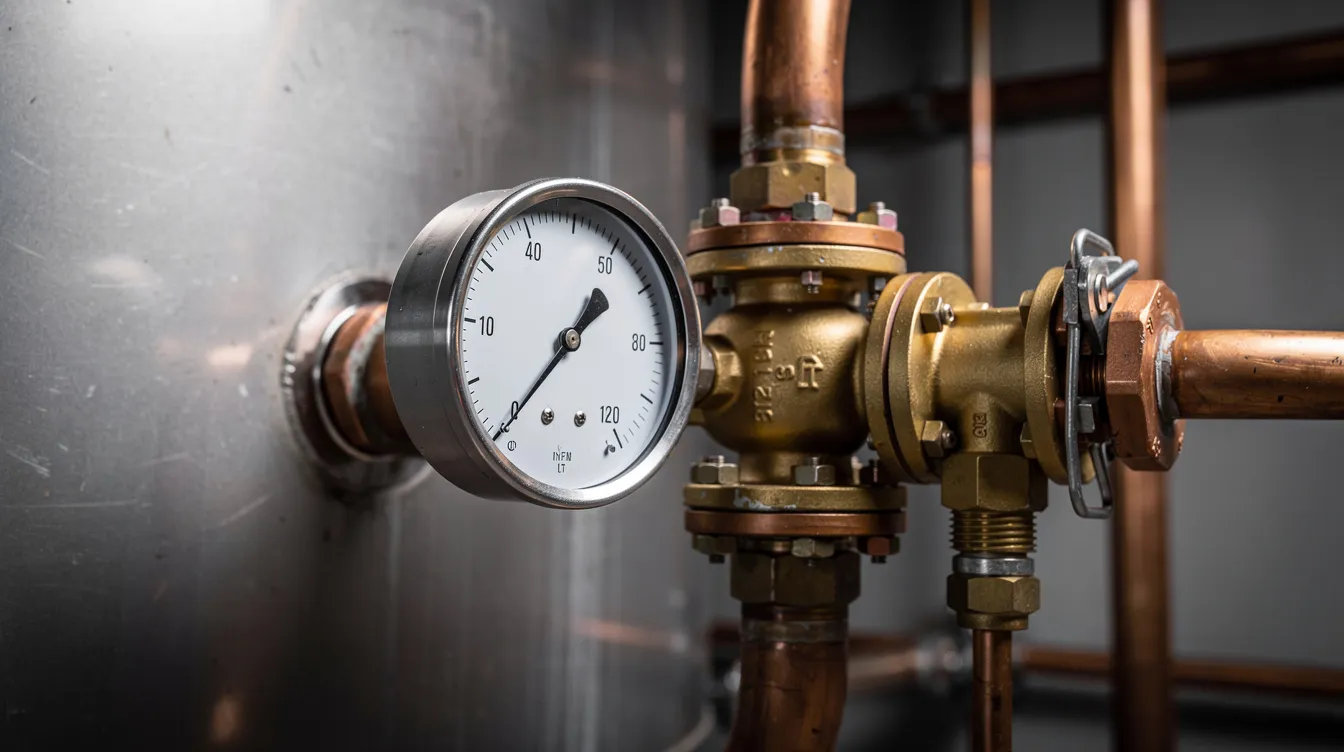
Frequent pressure swings on the boiler gauge – rapidly cycling between well under 10 psi and near the upper safe limit – or repeated lockouts and fault codes mean the boiler’s safety controls are intervening to prevent damage. This pattern should not be ignored.
Concrete causes include failing expansion tanks, stuck fill valves, circulation pump failures, blocked return lines, faulty pressure sensors, or ignition failures on gas-fired boilers common across Orleans Parish. Boiler failures can often be attributed to faulty components like the igniter or pressure relief valve, and pressure instability frequently traces back to one of these parts.
Repeatedly resetting a locking safety device without understanding why it tripped can turn a manageable problem into a catastrophic failure. When this pattern appears, same-day boiler diagnostics by experienced technicians is the correct response. New Orleans Mechanical Pros technicians review fault histories, check pressure controls, and test safeties rather than simply clearing error codes.
Visible Steam, Scorching, or Burning Odors Near Boiler Equipment
There is a clear difference between normal warm-air convection around an operating boiler and dangerous conditions such as visible steam jets, water spraying under pressure, scorched insulation, or a sharp burning smell from wiring or insulation. The latter group requires immediate attention.
Steam leaks and very hot water leaks can cause severe burns in seconds. These may indicate failed gaskets, cracked heat exchangers, or compromised piping joints – all more common in older New Orleans mechanical rooms where high humidity and corrosion have been working on metal and seals for decades. A boiler leaking water from any joint, valve, or its shell is a condition that worsens under continued operation.
If you see steam, water spraying, or smoke-like vapor around a boiler, stay clear of the leak path. Use the clearly marked emergency shut-off switch if it is safely accessible, then call for emergency boiler repair service. Burning odors from electrical components, melting plastic, or charring insulation are reasons to cut power at a safe distance and keep all occupants away from the boiler room until a technician evaluates the system.
When a Boiler Warning Becomes a Safety Emergency
Some warning signs escalate from “call soon” to “leave the area now.” Safety always comes before restoring heat or hot water.
Scenarios that require immediate evacuation and a 911 call:
- Any suspected gas odor near the boiler or gas piping
- Signs of carbon monoxide exposure – headache, nausea, confusion – affecting multiple people while gas appliances are running
- Visible flames outside the firebox or burner compartment
- Heavy smoke or unusual vapor filling the boiler room
Serious but non-evacuation issues – such as water leaks, relief valve discharge, or low-water cutoff trips – generally allow occupants to remain elsewhere in the building after an emergency shut-down while the boiler experts investigate.
Untrained personnel should never bypass safeties, jump out low-water cutoffs, or tape down emergency switches. From 2017 to 2019, heating system malfunctions contributed to approximately 34,200 residential fires annually in the United States, causing roughly 165 deaths. Most of these were preventable. New Orleans Mechanical Pros can evaluate whether a boiler can be repaired, derated, or needs replacement for long-term safety.
Low-Water Cutoff Trips and Boiler Safety Shutdowns
A low-water cutoff trip is a serious safety event. It means the boiler’s water level dropped below the minimum threshold required for safe operation, and the burner was automatically shut down to prevent overheating. The cause must be found and corrected before restart, and the situation often warrants emergency service if the boiler is needed for critical heat or hot water.
Both hot-water and steam boiler systems in New Orleans commonly rely on low-water cutoffs as a primary safety device. In multi-story buildings, low-water events can be tied to leaks several floors away, faulty feedwater systems, or air entrainment – meaning the problem may not be visible in the boiler room itself. A systematic diagnostic approach by experienced technicians is needed to trace the root cause.
What Does a Boiler Low-Water Cutoff Do?
The low-water cutoff monitors boiler water level using either a float mechanism or an electronic probe. When the water drops below a safe threshold, the device automatically shuts off the burner, preventing the boiler’s metal surfaces from overheating, warping, or cracking. Without this control, a boiler running dry can overheat catastrophically.
Probe-type low-water cutoffs are common on modern condensing boilers and many hot water systems. Float-type devices are still widely used on older cast-iron boilers and steam boilers throughout New Orleans, particularly in historic properties. Float chambers on steam boilers require regular blowdown to remove sludge and sediment that can impair float movement.
Louisiana Administrative Code §V-5071 mandates that every automatically fired steam boiler must have an automatic low-water fuel cutoff. Most boiler codes and insurer guidelines consider a functioning low-water cutoff a mandatory safety control. A tripped low-water cutoff is evidence it is doing its job – it should never be bypassed, jumped, or permanently reset just to restore heat.
Why Does a Boiler Keep Tripping Its Low-Water Cutoff?
The most common reasons for repeated low-water cutoff trips in New Orleans properties include actual water loss from leaks, failing auto-fill or feedwater valves, blocked or dirty sensor probes, and rapid boiling caused by scale buildup or poor circulation. You should maintain boiler pressure within a normal range of 1 to 1.5 bar for optimal function; pressure outside this range often accompanies water-level issues.
Real-world examples are common: leaking radiant loops under tile floors in older Uptown homes, corroded steel piping in pre-war apartment buildings, and neglected water treatment on commercial steam boilers serving French Quarter hotels. In each case, the boiler system is losing water faster than makeup can replace it. Because most boilers recirculate and reuse water rather than wasting it, repeated low-water trips usually point to leaks, sensor problems, or feed issues. In other cases, sensors are too fouled to read levels accurately.
In some cases, the boiler may appear full of water while the low-water cutoff chamber is blocked with sludge, causing false trips – or more dangerously, preventing the device from sensing a true low-water condition. New Orleans Mechanical Pros technicians inspect for external leaks, test auto-fill operation, clean or replace probes, and verify proper boiler system pressure to identify the root cause, not just the symptom.
Is It Safe to Restart a Boiler After a Low-Water Shutdown?
A boiler should only be restarted after the cause of the low-water event has been found and corrected, and after a qualified boiler technician has verified normal water level and safe operation. This is not optional guidance – it is a fundamental safety principle.
Simply adding water to a hot, partially dry boiler can cause thermal shock and cracking, particularly in cast-iron sections. Repeatedly resetting a low-water cutoff without investigation can lead to serious damage or rupture. Contain water leaks immediately to prevent property damage during a boiler emergency, and avoid adding chemicals or “quick fixes” before the system has been evaluated.
For building staff: document the fault code, check for visible leaks around radiators and piping, then call for emergency boiler repair if the boiler is needed for critical heating or domestic hot water. Many manufacturers’ service manuals instruct operators not to restart after certain low-water events until the system has been professionally inspected.
How New Orleans Mechanical Pros Diagnoses Boiler Safety Shutdowns
Technicians approach low-water cutoff trips methodically: verify power and control circuits, check actual water level and pressure at the gauge glass, inspect low-water cutoff wiring and sensors, and review any stored fault history on modern control panels. Safety checks are a critical initial step for emergency boiler technicians upon arrival.
Diagnostics also include checking feedwater or auto-fill valves, pressure-reducing valves, expansion tanks, and visible boiler piping for leaks or blockages that could cause water loss or sensor misreadings. The technician conducts system diagnostics to identify boiler issues before recommending any repair path.
For steam boilers, technicians may perform blowdown tests on low-water cutoffs, test gauge glass function, and evaluate return lines and condensate pumps common in multi-story New Orleans commercial buildings. Once the cause is identified, New Orleans Mechanical Pros explains the repair path and works to fix the underlying cause when feasible, rather than only restoring operation temporarily, while discussing options such as parts replacement, partial piping repair, or recommending a new boiler installation if the system is severely compromised.
Gas Odors, Active Leaks, and Dangerous Boiler Conditions
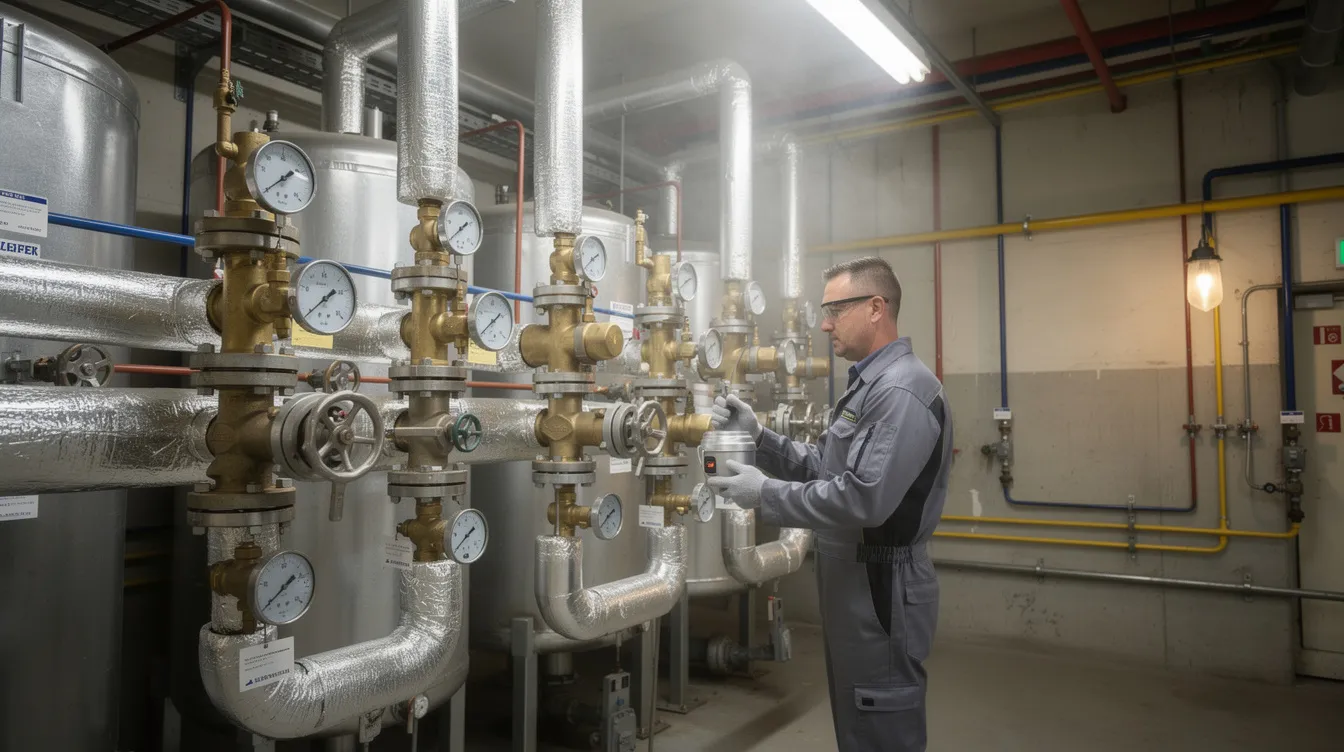
Any suspected gas odor, visible flame outside the boiler firebox, or active water or steam leak near a boiler warrants immediate action. Evacuate and call 911 or the gas utility for gas smells. Use an emergency shut-off or main disconnect – if safely accessible – plus an emergency boiler technician for major leaks or overheating. Do not stay inside to troubleshoot.
New Orleans’ widespread use of natural gas boilers for both space heating and domestic hot water makes it essential to recognize gas leak signs and to know where emergency shut-off switches are located. Louisiana’s State Uniform Construction Code, enforced by the Office of State Fire Marshal, requires proper gas piping, venting, and combustion air provisions for all gas-fired equipment.
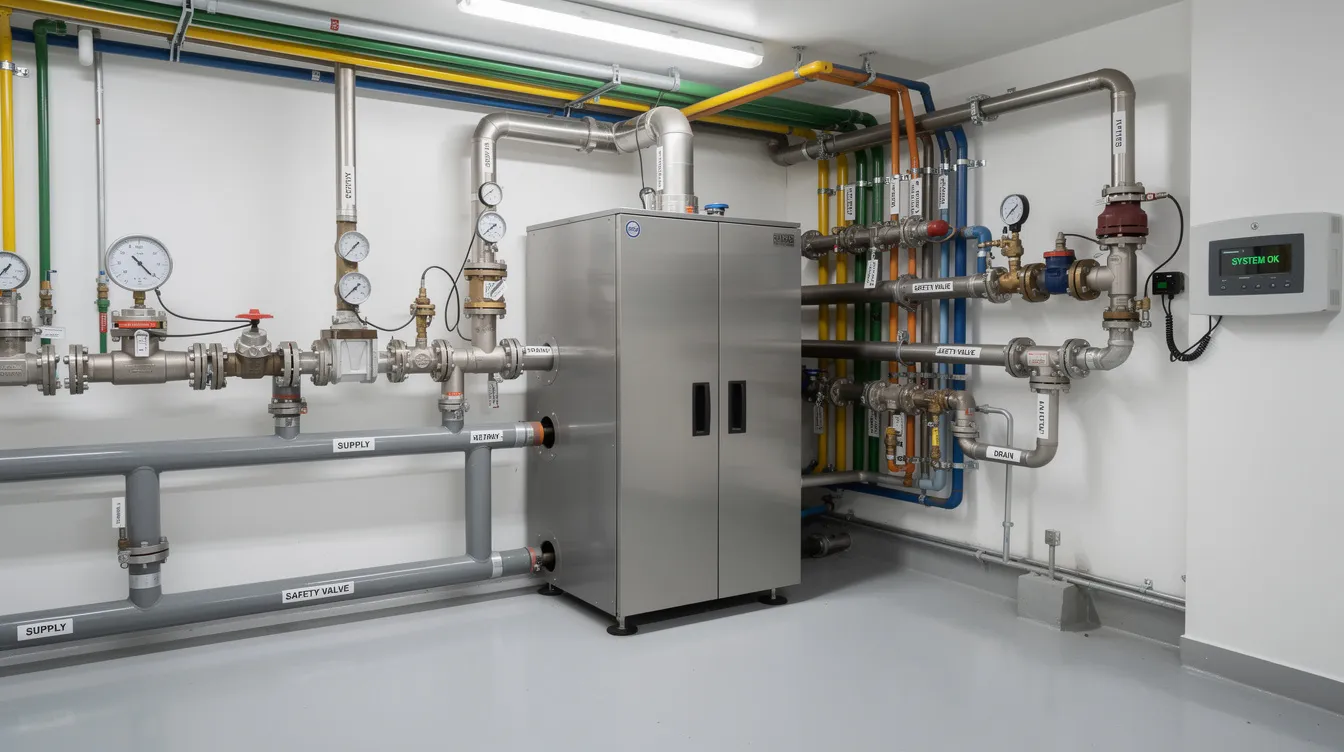
This section covers gas smells, carbon monoxide risks, and dangerous water or steam leaks that require fast boiler emergency service.
What Does a Gas Leak Near a Boiler Smell Like?
Utilities add an odorant called mercaptan to otherwise odorless natural gas, giving it a sulfur-like or rotten-egg smell that many New Orleans residents can recognize immediately. This is your first line of defense when a gas valve, flexible connector, or burner seal develops a leak.
Some people have a reduced sense of smell, and gas leaks in well-ventilated or windy spaces may not always be obvious. This makes working carbon monoxide detectors and regular boiler inspections essential backup measures. Gas odors are typically strongest near gas valves, flexible connections, or burner compartments, and a hissing sound near gas piping or meter sets can indicate a problem even when the odor is faint.
Any suspected gas leak is an emergency. It should not be investigated by untrained occupants using soapy water, matches, or any other method. Evacuate first.
What Should You Do if You Smell Gas Near Your Boiler?
Leave the building immediately. Do not operate light switches, phones, or appliances inside. Do not start vehicles in attached garages. Call 911 or the gas utility’s 24-hour emergency number from a safe outdoor location.
Do not attempt to relight pilot flames, open boiler access panels, or search for the source of the leak yourself. Evacuate the building if there is a gas leak or carbon monoxide alarm – this instruction applies to everyone in the structure, not just the person who detected the odor.
Only after emergency responders or the utility have declared the building safe should a boiler technician be called to inspect and repair the boiler system, gas piping, or venting issues that contributed to the hazard. New Orleans Mechanical Pros can inspect gas-fired boiler systems after clearance is given, checking gas trains, ignition components, and combustion setup to reduce the risk of repeat issues.
Carbon Monoxide Risks Associated With Gas-Fired Boilers
Carbon monoxide is a colorless, odorless gas produced by incomplete combustion. It can build up indoors when a gas-fired boiler or its venting system is malfunctioning – a cracked heat exchanger, blocked flue, or improper combustion air supply can all generate dangerous levels of CO without any visible or detectable sign.
Symptoms of CO exposure include headache, dizziness, nausea, confusion, and flu-like feelings that improve when leaving the building. Multiple people feeling ill at once is a significant red flag. The CDC notes that CO poisoning can be fatal, especially during sleep when symptoms go unnoticed.
Install UL-listed carbon monoxide detectors on each floor and near sleeping areas in New Orleans homes, and in appropriate locations for commercial buildings following local code requirements. If a CO alarm sounds, go outside immediately, call emergency services, and only after the hazard is cleared should a boiler technician inspect the boiler, venting, and combustion air supply.
Boiler Leaking Water or Steam: When to Call for Emergency Service
An actively leaking boiler – whether from the pressure relief valve, piping joints, circulator pumps, or the boiler shell itself – can damage equipment, electrical systems, and building finishes. In tightly packed New Orleans mechanical rooms, even a small leak can reach panels, motors, or wiring within hours.
Discharge from a temperature-and-pressure relief valve usually indicates an overpressure or overheating condition, a sizing problem, or a failing expansion tank. This is not a nuisance drip – it is an urgent safety issue that signals the boiler system is exceeding safe operating limits.
High-temperature water and steam leaks in multifamily buildings, hotels, and schools pose burn hazards. Keep people away from the leak, shut down the boiler if the disconnect is safely reachable, and request emergency boiler leak repair. New Orleans Mechanical Pros evaluates whether a leaking boiler can be repaired same-day or if temporary isolation and follow-up work are required, depending on parts availability and the nature of the failure.
When Can a Gas or Leaking Boiler Be Safely Restarted?
Gas-fired boilers and boilers that have been leaking should only be restarted after the specific fault has been identified and corrected, and the technician must fix that fault before restart rather than simply clear the shutdown condition; all safety devices and venting should also be rechecked by a qualified boiler technician. Technicians will check for gas leaks or carbon monoxide hazards before repairing the boiler and returning it to service.
Emergency responders or utilities may shut off gas or power. Service must be restored in coordination with them and the property owner before diagnostics and restart can proceed. Response to significant boiler failures often requires a follow-up inspection after repairs to verify that corrective work holds under normal operating conditions.
New Orleans Mechanical Pros technicians perform post-repair safety checks, including leak testing, combustion analysis where applicable, and functional verification of low-water cutoffs and pressure controls before returning equipment to service. Building operators should document all emergency events and corrective actions for internal records, insurance, and code-compliance purposes.
Loss of Heat and Hot Water: When Is Boiler Repair an Emergency in New Orleans?
In New Orleans, loss of heat or hot water becomes an emergency when indoor temperatures risk occupant health, when temperature-sensitive equipment or processes are at risk, or when large numbers of tenants or guests are affected. Boiler failures can occur during freezing temperatures, requiring immediate repair to prevent cascading damage.
While the New Orleans climate is milder than northern cities, rare freezing events, older drafty homes, and vulnerable occupants – elderly residents, infants, and medically fragile individuals – mean that even overnight heating loss can be serious. Properties with uninsulated walls and exposed plumbing face frozen-pipe risks that amplify the cost and disruption far beyond the boiler itself.
For hotels, multifamily buildings, restaurants, and healthcare facilities, loss of hot water from a central boiler can immediately impact sanitation, guest comfort, and regulatory compliance, making same-day boiler diagnostics critical.
Complete Boiler Failure During Cold Weather in New Orleans
Even a few nights of subfreezing temperatures – such as recent cold snaps across Orleans and Jefferson Parishes – can create risks of frozen pipes, particularly in older homes with minimally insulated walls and exposed plumbing in crawl spaces or attics.
A boiler not heating at all, with indoor temperatures falling into the low 50s or 40s, is an emergency for households with infants, elderly residents, or people with medical conditions that make cold exposure dangerous. In these situations, emergency heating and plumbing services are available in the Greater New Orleans area, and calling at the first sign of trouble is far better than waiting until pipes freeze.
Temporary measures – using safe supplemental heat sources, closing off unused rooms, and monitoring indoor temperatures – can help while waiting for an emergency boiler repair technician. However, never use ovens or unvented combustion heaters as a substitute heating system, as these introduce serious carbon monoxide and fire safety risks. New Orleans Mechanical Pros can assess whether ignition failures, pump issues, thermostat failure, or control problems are causing no-heat conditions and can often restore operation faster when called early.
No Hot Water in Hotels, Apartment Buildings, and Commercial Properties
Many New Orleans hotels, mid-rise apartments, and mixed-use buildings rely on central boiler systems for domestic hot water, and the supporting pumps, controls, and circulation equipment also depend on electricity, so outages or control failures can disrupt service even when the boiler itself is intact. When these systems fail, the impact reaches cleaning operations, laundry, kitchen and food service, and guest accommodations – all within hours.
Consider a French Quarter hotel losing hot water during a busy weekend, or an Uptown apartment building where the boiler system supplies both space heat and hot water for dozens of tenants. In a food processing plant or commercial kitchen, loss of hot water can halt operations entirely and create health code violations.
In these commercial and multifamily situations, boiler emergencies are defined not only by temperature but by service continuity, health codes, and customer satisfaction. Rapid response is crucial. New Orleans Mechanical Pros coordinates with property managers, facility teams, and on-site maintenance to gain access to boiler rooms and restore boiler systems as efficiently as possible.
Residential Boiler Problems Versus Commercial Heating Emergencies
The impact of a failed boiler in a single-family New Orleans home is very different from a failure in a large commercial or institutional boiler plant serving multiple floors or an entire campus. Both deserve prompt attention, but the scope of disruption varies dramatically.
Commercial boiler emergencies may involve critical areas such as hospitals, laboratories, data rooms with hydronic cooling, or kitchens requiring hot water for sanitation. Natural gas boilers have lower operating costs and emissions, making them the most common fuel choice in the area – but they still fail, and when they do in a commercial setting, the consequences ripple through entire operations. Oil boilers generate powerful heat output when gas is unavailable, and electric boilers offer a clean and efficient power source for specific applications, but all boiler types require prompt service when emergencies arise.
The size and complexity of commercial boiler systems – often involving multiple boilers, pumps, and control loops – means diagnostics and emergency repairs can be more involved. Staged temporary solutions may keep partial service running while full repairs proceed. Residential and commercial customers alike should provide detailed symptom descriptions and facility information when calling for same-day boiler diagnostics.
When Should You Request Same-Day Boiler Diagnostics?
Request same-day service when:
- The boiler repeatedly locks out and will not stay running
- Pressure is unstable or the gauge is behaving erratically
- Large areas lose heat or hot water
- A key business process or building occupancy is threatened by the failure
- Low boiler pressure is preventing the system from firing
A scheduled non-emergency appointment may be adequate for minor comfort issues, such as a single lukewarm radiator when the rest of the system is functioning normally, or minor issues like a slow drip from a valve that is not near electrical equipment.
Before calling, gather information: boiler type (steam or hot water), fuel (gas, oil, electric), approximate age, and any fault codes on the display. This speeds up troubleshooting once a technician arrives. New Orleans Mechanical Pros uses this information to determine whether emergency boiler repair, temporary bypasses, or planned upgrades are the most practical path forward.
What Happens During an Emergency Boiler Service Call?
An emergency boiler technician checks safety first: gas leaks, electrical hazards, water level, pressure, and temperature. Only after confirming the area is safe does targeted diagnostics of ignition, pumps, and controls begin. Emergency boiler repair technicians can diagnose issues on-site and typically outline findings and options before any repair work begins.
The process is orderly and methodical. The goal is to stabilize the situation, find the cause, explain repair options and costs, and then proceed with authorized work. Emergency repair processes should provide upfront pricing before starting work. Actual timing, pricing, and availability depend on the specific situation – customers should confirm all details directly with New Orleans Mechanical Pros at the time of service.
Step 1 – Initial Boiler Safety Assessment
The technician first speaks with the owner, property manager, or maintenance staff to understand symptoms, timing, and any previous repairs or shutdown attempts. This conversation often reveals critical details – such as whether the boiler has been reset multiple times, whether anyone smelled gas, or how long the system has been down.
Upon entering the mechanical room or boiler area, the technician visually checks for gas odors, standing water, steam leaks, tripped breakers, and warning indicators on the boiler control panel. If any immediate hazards are found – such as active gas leaks, dangerously high pressure, or severe overheating – the technician will secure energy sources using emergency shut-offs or main disconnects before proceeding.
This stage is focused entirely on stabilizing the situation and protecting occupants and property before detailed diagnostics begin. Emergency boiler service providers should confirm their licensing and expertise with specific boiler types before beginning work.
Step 2 – Boiler Diagnostic Testing and Fault Identification
Once the area is safe, the boiler technician tests key systems: confirming proper water level and pressure, checking ignition sequences, verifying pump operation, and reviewing any electronic fault codes or lockout histories. Emergency technicians typically arrive within 30 to 60 minutes for local calls, then spend focused time on diagnostics.
Diagnostic tools may include multimeters, combustion analyzers for gas-fired boilers, infrared thermometers, and manufacturer-specific control interfaces to pinpoint where in the boiler system the failure is occurring. In multi-boiler plants, technicians may isolate individual boilers to determine which unit or circuit is responsible for the loss of heat or hot water.
Thorough diagnostics aim to identify the true root cause – such as a failing circulator pump, blocked flue, or faulty low-water cutoff – rather than just resetting alarms. Not all HVAC contractors specialize in boiler services; verification is necessary before calling, especially for complex commercial equipment involving steam or older boiler models.
Step 3 – Explaining the Repair Options and Estimated Cost
The technician summarizes findings in plain language: which components failed, how they relate to the boiler’s operation, and what contributed to the breakdown – whether age, water quality, lack of maintenance, or a combination. Boiler repair costs vary based on the issue and parts needed.
Available repair options are outlined, including parts that may be in stock versus those requiring ordering, and whether temporary patches or full component replacements are recommended. Simple boiler repairs can cost between $150 and $500, while complex boiler repairs may range from $500 to $1,500. Customers receive an estimated cost and timeframe before work begins, with clear distinctions between immediate emergency work and any recommended follow-up boiler maintenance or system upgrades.
Building operators should ask about the impact of each option on energy efficiency, safety, and long-term reliability of their boiler system.
Step 4 – Emergency Repairs and Safety Verification
After obtaining authorization, the technician performs the agreed-upon repair work – replacing failed pumps, valves, ignition parts, control boards, or sections of leaking piping. Most boiler repairs are intended to fix the failure safely and restore service within 1 to 3 hours when parts are available, though complex issues may extend beyond that window. Most boiler repairs can be completed within a few hours when parts are available.
Once repairs are complete, the boiler is restarted under controlled conditions, monitoring water level, pressure, temperature, and combustion to ensure responses are normal. Safety devices – including low-water cutoffs, pressure relief valves, flame safeguards, and emergency shut-off circuits – are tested or observed in operation wherever practical.
Only after the system passes these safety checks does the technician fully return the boiler to service for regular operation.
Step 5 – Preventive Recommendations to Reduce Future Boiler Emergencies
Before leaving, the technician reviews patterns that could lead to repeat failures: poor water treatment, undersized expansion tanks, outdated controls, or lack of regular inspections. Annual maintenance prevents emergency failures in boilers and is the single most effective way to reduce unplanned shutdowns.
Specific preventive steps include scheduling annual boiler inspections, verifying low-water cutoff tests, cleaning burners, checking pumps and valves, and monitoring boiler water quality for scale and corrosion. Regular maintenance improves boiler efficiency and reduces energy bills over the life of the system. Professional maintenance keeps boilers compliant with warranties – an important consideration if parts replacement or a new system is needed down the road.
New Orleans Mechanical Pros can help set up a commercial boiler maintenance program or residential tune-ups aimed at improving energy efficiency and reducing emergency breakdowns. No maintenance program can guarantee zero emergencies, but it can significantly reduce their frequency and severity. Keeping maintenance logs and service records also helps technicians diagnose future boiler issues more quickly and accurately.
Residential and Commercial Emergency Boiler Repair Across Greater New Orleans
New Orleans Mechanical Pros provides emergency boiler diagnostics and repair for both residential and commercial boiler systems throughout Greater New Orleans. Actual service areas and emergency availability should always be confirmed by phone, as demand fluctuates with weather and the heating season.
Common local settings include historic homes in Uptown and the Garden District, hotels and restaurants in the French Quarter and CBD, multifamily buildings in Mid-City, and commercial or light-industrial facilities in Metairie and Kenner. While the core safety principles are the same for all boiler types, real-world solutions differ depending on system size, age, fuel supply, and whether the boiler supports space heating, domestic hot water, or critical process loads.
Boiler Problems in Historic Uptown and Garden District Properties
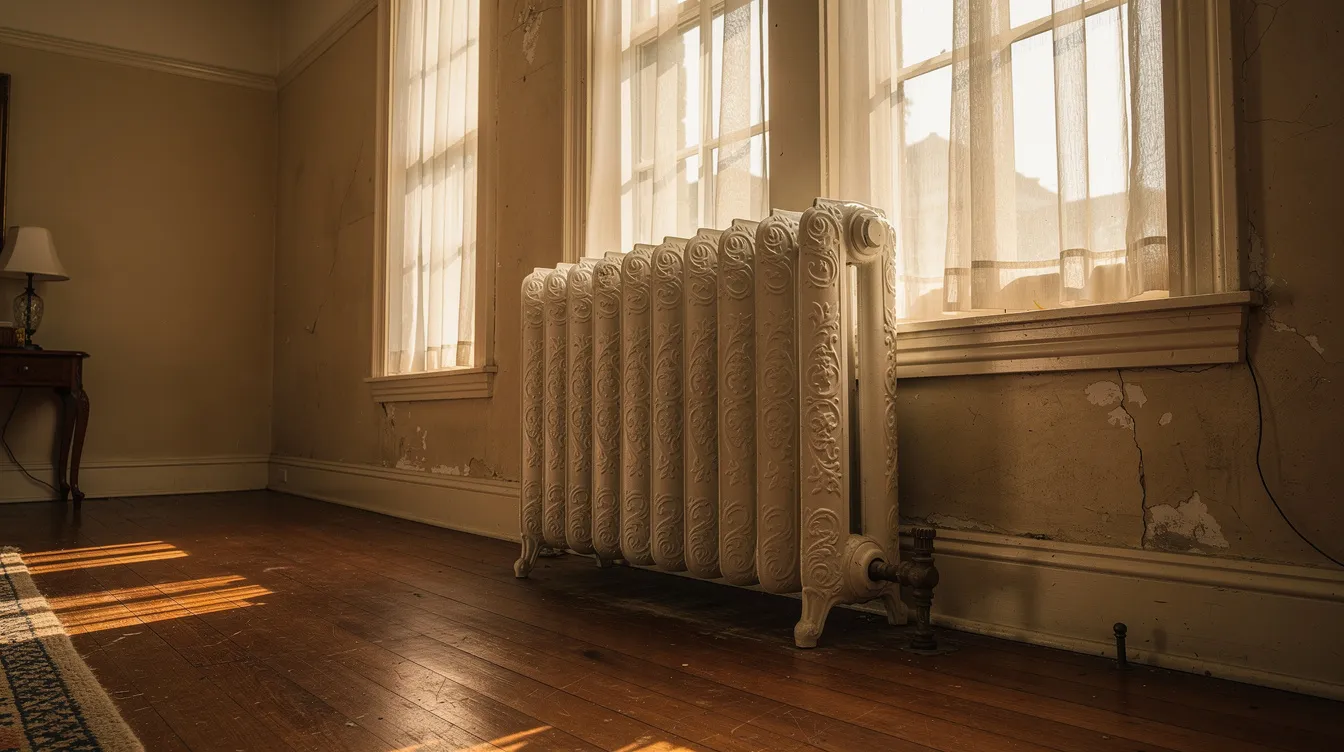
Many Uptown and Garden District homes and small multifamily buildings still rely on older cast-iron boilers and radiator systems. These setups can be more prone to leaks, air problems, and outdated safety controls. Cast iron is durable but brittle under thermal shock, and many of these systems lack modern safety interlocks that are standard on a new boiler.
Emergency boiler repair in these properties often involves balancing respect for historic finishes with the need to update critical safety devices like low-water cutoffs, pressure controls, and emergency shut-off switches. New Orleans Mechanical Pros can evaluate when targeted repairs will keep an older boiler system running safely versus when a modern boiler installation may provide better energy efficiency and reliability.
Owners of historic properties should schedule proactive boiler inspections before the heating season rather than waiting for a mid-winter breakdown. A well maintained boiler – even an older one – is far safer and more efficient than a neglected system of any age.
Commercial Boiler Emergencies in Downtown New Orleans and the French Quarter
Hotels, restaurants, office buildings, and event venues in the CBD and French Quarter often depend on centralized boiler systems for both heating and large domestic hot water demands. When these systems fail, business operations suffer immediately.
Typical commercial emergencies include multiple guest rooms without hot water, restaurant dishwashers unable to sanitize, or conference spaces losing heat before a scheduled event. These situations directly affect customer satisfaction and regulatory standing. Commercial boiler systems may involve multiple boilers, large pumps, control panels, and integration with building management systems, requiring experienced technicians familiar with these more complex setups.
New Orleans Mechanical Pros works with facility managers to prioritize restoring essential functions quickly, then schedules non-urgent optimization or retrofit work during lower-demand periods.
Emergency Boiler Diagnostics for Apartment Buildings and Multi-Unit Properties
Centralized boiler systems serving multi-unit properties in Mid-City, Gentilly, and Algiers can create building-wide emergencies when they fail, impacting dozens of tenants at once. Property managers need clear timelines, documentation, and communication regarding boiler repairs, temporary shutdowns, and any necessary access to individual units for radiator or piping checks.
New Orleans Mechanical Pros can help identify chronic boiler system issues like undersized pumps, distribution imbalances, and recurring leaks that contribute to frequent emergency calls. Multi-unit property owners should consider regular boiler maintenance agreements to reduce unplanned outages and protect both tenants and building assets.
Boiler Service Across New Orleans, Metairie, and Kenner
Service coverage includes New Orleans (Orleans Parish), Metairie, Kenner, and nearby communities. Readers should call to confirm the current service radius for their location, especially during peak demand.
Service offerings include emergency boiler repair, scheduled boiler installation, and preventive maintenance for a variety of boiler types – from compact residential units to larger commercial boilers. Firetube boilers are suitable for low-pressure applications, while watertube boilers are optimal for high-pressure steam needs. Biomass boilers utilize renewable organic materials for energy in specialized installations. Whatever the system, providing an exact address, boiler model if known, and a brief description of the problem when calling helps dispatch the right boiler technician and equipment.
During regional cold spells or severe weather, early calls help secure quicker appointment times for urgent boiler system issues. Priority service is more easily arranged when the call comes before temperatures drop, not after.
How New Orleans Mechanical Pros Helps Prevent Repeat Boiler Emergencies
While emergency boiler repair solves immediate problems, long-term reliability depends on regular inspections, water treatment, and routine maintenance that keep safety controls and mechanical components in good condition. Preventive work improves energy efficiency, reduces fuel supply waste, and extends boiler system life.
No maintenance program can guarantee zero breakdowns. But it can significantly reduce the frequency and severity of emergency boiler calls, keeping energy bills lower and extending the useful life of the equipment.
Inspecting Boiler Safety Controls and Low-Water Cutoffs
Technicians conduct routine tests on low-water cutoffs, flame safeguards, pressure switches, and emergency shut-off circuits to confirm they react properly under simulated fault conditions. These inspections follow manufacturer and National Board recommendations, including periodic blowdown testing on steam boiler low-water cutoffs and cleaning of probe-type sensors on hot-water boilers.
Catching a sluggish or failed safety device early is far less disruptive and costly than discovering the issue during an actual emergency shutdown. Routine inspections catch minor issues before they escalate into expensive repairs or dangerous conditions. Building owners should keep a written record of each boiler inspection, noting which controls were tested and when.
Checking Pumps, Valves, Expansion Tanks, and Operating Pressure
Circulator pumps, zone valves, and isolation valves must all operate correctly to maintain stable circulation and pressure. Wear or sticking components can quietly set the stage for future emergencies without any obvious external sign.
Technicians verify proper expansion tank precharge, look for evidence of frequent relief valve lifting, and adjust system pressure to manufacturer-recommended ranges for the specific boiler type. Many repeated boiler lockouts and nuisance pressure issues in New Orleans homes are traceable to neglected expansion tanks or partially closed valves – both easily caught during routine maintenance. Commercial systems may also involve balancing valves and control valves requiring periodic inspection to maintain proper distribution of heat and hot water.
Evaluating Boiler Water Quality, Corrosion, and Scale
Poor water quality – high mineral content, oxygen ingress, or improper chemical treatment – leads to internal scale, sludge, and corrosion inside boilers and piping. In New Orleans, local water hardness and high humidity compound these problems, wasting energy and accelerating wear on heat exchanger surfaces.
Scale buildup reduces heat transfer efficiency, forcing the boiler to work harder and consume more fuel for the same output, making overheating, kettling noises, and premature component failure more likely. The boiler ends up wasting energy and delivering less heat. New Orleans Mechanical Pros can coordinate with water treatment specialists to test boiler water, recommend appropriate treatment programs, and perform periodic flushing or cleaning where needed.
Attention to water quality is especially important for high efficiency condensing boilers and commercial steam boilers, which can be less tolerant of neglect than older, heavier designs. High-efficiency boilers can achieve up to 98% AFUE, but only when the system is clean and properly maintained. Upgrading to high-efficiency boilers reduces fuel costs significantly, and high-efficiency boilers consume less fuel for the same heat output, but they need clean water and proper care to deliver on that promise.
Establishing a Boiler Maintenance Schedule for Commercial Properties
Commercial and multi-tenant properties benefit from structured boiler maintenance plans that include seasonal inspections, annual combustion checks, safety testing, and documentation for insurance or regulatory compliance. Boilers can last 20 to 30 years with proper maintenance, making a consistent maintenance schedule one of the best investments a building owner can make.
Maintenance visits can be scheduled during low-occupancy periods or milder weather to minimize disruption. New Orleans Mechanical Pros can help property managers prioritize tasks based on risk – addressing safety-critical items first, coordinating with facility engineers on compliance planning, and planning larger capital improvements over time.
Facilities should integrate boiler maintenance into their overall asset management strategy, tracking peak performance metrics, repairs, and energy consumption year over year. High-efficiency boilers provide immediate savings on operational expenditure, and installing high-efficiency boilers may qualify for energy rebates – factors worth considering when planning upgrades alongside maintenance.
Frequently Asked Questions About Emergency Boiler Repair in New Orleans
These concise Q&A items address common questions New Orleans homeowners and facility managers ask when facing boiler problems. Answers are focused on clarity and safety. For current pricing, response times, and availability, call New Orleans Mechanical Pros directly.
What qualifies as an emergency boiler repair?
Emergencies typically involve gas odors, visible steam or hot-water leaks, repeated low-water cutoff trips, total loss of heat or hot water affecting health or business operations, or any situation where safety devices are activating repeatedly. Comfort issues that do not threaten occupants or cause damage may be handled as standard repair visits, but you can always call to discuss whether same-day service is appropriate for your situation.
How quickly can a boiler technician usually arrive in New Orleans?
Response times vary with time of day, weather, current workload, and location within Greater New Orleans. Emergency technicians typically arrive within 30 to 60 minutes for local calls during normal conditions, but exact timing can only be confirmed when you call. Earlier calls generally make it easier to schedule faster evaluations during busy periods, especially at the start of the heating season.
Can a leaking or failed boiler be repaired the same day?
Some issues – such as failed pumps, controls, or minor piping leaks – may be repairable the same day if needed parts are on the truck or locally available. Larger component failures, specialty parts for older boiler models, or extensive corrosion damage may require temporary shutdown and a follow-up visit. The technician will outline options and costs after diagnosing the problem. If repair costs exceed 50% of a new boiler, replacement is generally the better long-term choice.
Should I turn off my boiler if I see water on the floor?
If it is safe to reach the boiler’s main switch or emergency shut-off without crossing standing water or steam, turning the boiler off is a prudent step to limit damage. Avoid touching wet electrical components, keep people away from the leak area, and call for boiler service promptly – especially if the water appears hot or is spraying from a pressure relief valve. The cost of emergency boiler repairs can vary based on the type of service required, but catching a leak early almost always reduces total damage.
Will my insurance cover damage from a boiler emergency?
Coverage depends on the specifics of each insurance policy and the cause of the damage. Contact your insurer or agent for guidance. Document the incident with photos, preserve service invoices, and request a written summary of findings from the boiler technician to assist with any potential claim. Keeping thorough records of regular maintenance also strengthens your position if a claim is filed.
Request Emergency Boiler Diagnostics in New Orleans
Boiler Trouble? Have the Problem Checked Before It Gets Worse.
A boiler that keeps shutting down, leaking water, or failing to heat can leave you facing a much bigger repair if the underlying cause is ignored. Whether the problem is a stubborn lockout, low pressure that will not hold, or a unit that simply will not fire, early evaluation saves time, money, and risk.
New Orleans Mechanical Pros provides residential and commercial mechanical services throughout Greater New Orleans. Call to discuss your boiler problem and confirm emergency service availability.
(504) 826-3775
For a suspected gas leak or carbon monoxide emergency, evacuate and call emergency services first.
Prompt evaluation by experienced technicians helps protect both people and property – and can improve the long-term performance and energy efficiency of your boiler system. Do not wait for a minor issue to become a major one.
More Articles
Heating & Boilers · Oct 26, 2026
Boiler Leaking Water Repair New Orleans: Common Causes and Solutions
Why boilers leak water in New Orleans: relief valves, expansion tanks, pump seals, piping and heat exchangers, plus when to shut down. Call (504) 826-3775.
Read article
Heating & Boilers · Oct 25, 2026
Boiler Repair in New Orleans: A Guide for Homes, Businesses & Historic Properties
A practical guide to boiler repair in New Orleans: common problems, emergency steps, repair vs. replacement, costs, and caring for historic steam systems.
Read article
AC Repair Service · Sep 23, 2026
Cooling a Garden District House: What Owners Should Know About Raised Floors, Attics and Old Ductwork
Cooling an older Garden District house: raised floors, hot attics, retrofitted ductwork, water over plaster, and when repair beats replacement. (504) 826-3775.
Read article